
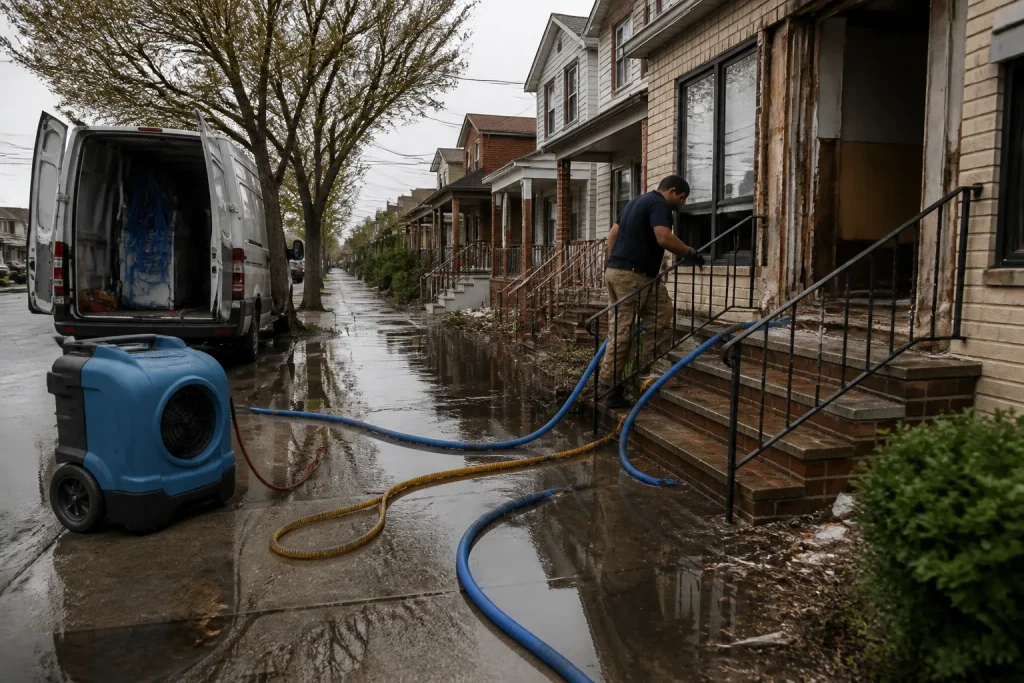
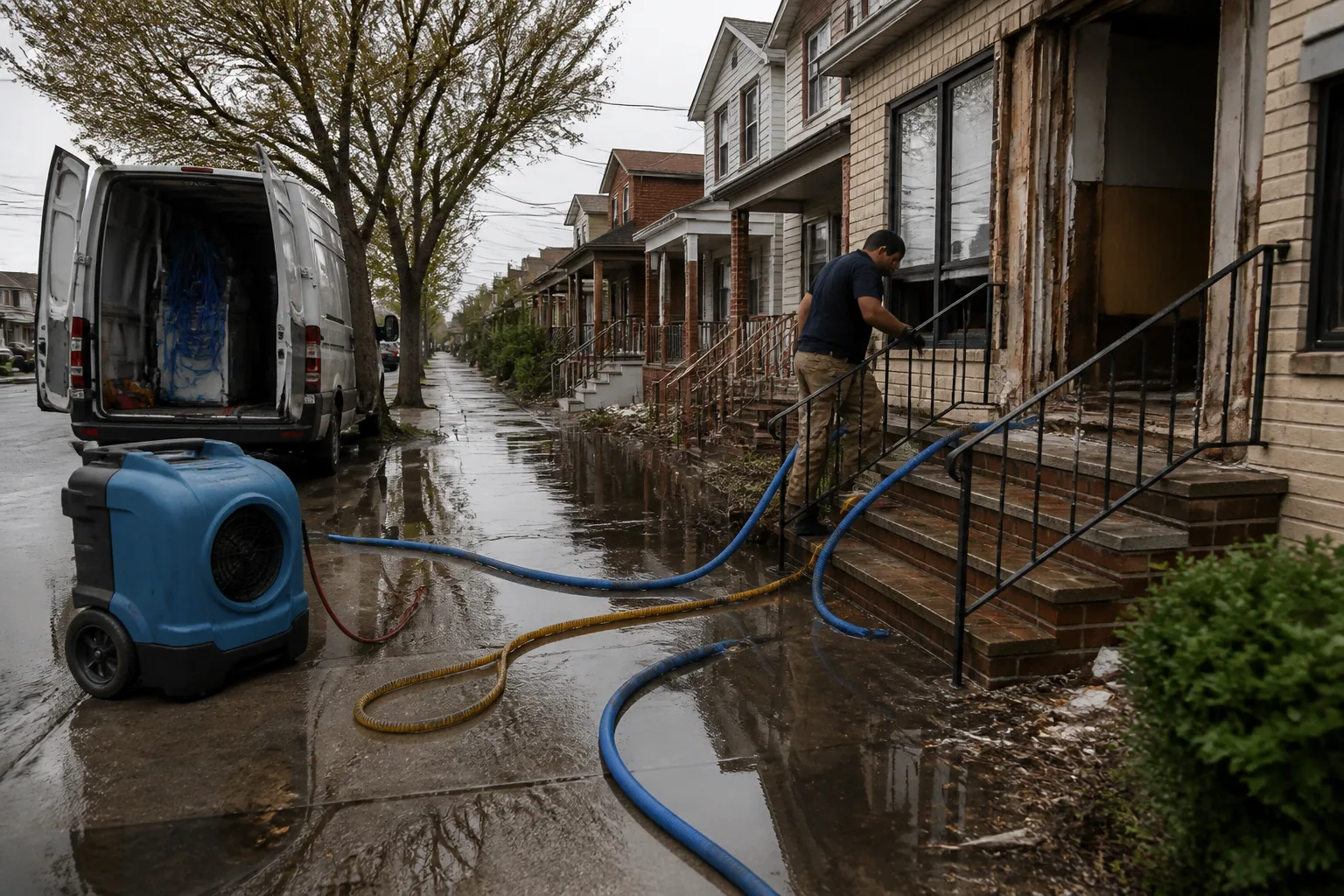
How to Choose the Right Damage Restoration Company in East Flatbush
The right damage restoration company in East Flatbush is one that handles the entire job, extraction through rebuild, with the same certified crew, bills your insurance carrier directly, and puts its guarantee in writing. Ask five pointed questions before you sign anything and you’ll separate the capable companies from the costly ones in about ten minutes. If you’d rather skip the homework and talk to someone directly, call (518) 750-3137 and we’ll walk you through it.
Most of the advice out there tells you to check licenses and read reviews. That’s fine, but it misses the real problem. The most common restoration complaint filed with the New York Department of State isn’t poor workmanship. It’s job abandonment after mitigation, when a company finishes the demo and drying, collects that payment from the insurer, and leaves the homeowner to find a separate contractor for reconstruction with whatever is left in the claim. In East Flatbush, where many homes are attached row houses and brick construction, a half-finished restoration isn’t just an inconvenience. It’s an open wall in a shared structure, with your neighbor’s house fifteen inches away.
The One Question That Matters Most
Before we get to the five questions, understand the core issue. Restoration work splits into two phases. Mitigation is the emergency response: stopping the water, pulling out soaked drywall, running professional drying equipment until the moisture readings hit the dry standard. Reconstruction is the rebuild: new framing, drywall, flooring, paint. Plenty of companies in this trade only do the first phase. They’re good at it. But when mitigation ends, their contract ends, and you’re standing in a gutted room holding an insurance check with a contractor-sized hole in it.
We’ve been called into East Flatbush homes where the mitigation crew finished, packed up their dehumidifiers, and never came back. The homeowner had to find a general contractor, negotiate a second scope of work, and explain to the insurance adjuster why the rebuild estimate didn’t match what was already paid out. That’s the trap. The question that reveals it: “Does the same certified crew that does the extraction do the reconstruction, or does the job get handed off?” If the answer is anything but a clear yes, keep looking.
Five Questions to Ask Every Restoration Company
Write these down. Ask them on the phone before you invite anyone into your home. A straight answer takes thirty seconds. A vague answer tells you everything you need to know.
1. Who on your crew holds the IICRC certification, not just the company?
A company can advertise “certified” because it employs one certified person. That person might be in the office, not in your basement. Ask for the name of the technician who will actually do the work and what certification they hold. In East Flatbush, where homes built in the 1930s and 1940s have plaster walls, old framing, and sometimes questionable previous renovations, you want the person holding the moisture meter to know what they’re reading. IICRC certification means the technician has been trained and tested in the science of drying, not just shown where the equipment plugs in.
2. Do you perform reconstruction, or only mitigation?
We covered this above, but it bears repeating because it’s the single most expensive question you can skip. If the company says they have “partners” for rebuild work, that means a second contract, a second negotiation, and you playing general contractor between two crews and your insurance carrier. Ask if the same crew handles both phases. Ask if the same project manager stays on the file from first extraction to final paint. The answer tells you whether you’re hiring one accountable party or two unaccountable ones.
3. Will you bill my insurance carrier directly?
This isn’t a convenience. It’s structural. When a restoration company bills your carrier directly, the contractor has to justify every line item in the carrier’s own language. That means the contractor knows Xactimate, the estimating software insurers use. It means they build a documented scope of work with photos, moisture readings, and material counts. It means they carry the right liability coverage for the work they’re scoping. And it means you’re not the payment middleman, floating tens of thousands of dollars on a credit card while you wait for a reimbursement check. In East Flatbush, where many homeowners are on fixed incomes or living on retirement savings, that float is real money.
4. What is your written guarantee on completed work?
Every company says they stand behind their work. Ask for it in writing. What specifically is covered? For how long? What’s the process if something fails? A vague satisfaction pledge isn’t a guarantee. A real one names completion standards, moisture clearance thresholds, and a defined dispute process. We give every client our 90-Day Done Right Promise in writing. It’s not a marketing slogan. It’s a legal commitment: if it’s not done right, we make it right. No paperwork battles, no arguing. If a company hesitates when you ask for a written guarantee, that hesitation is your answer.
5. Can I see a sample moisture log from a previous job?
A professional restoration company records moisture readings every day the drying equipment runs. It’s not optional. It’s how you know the structure actually dried, not just that the carpet feels dry on top. The log shows the starting moisture content, the daily readings, and the final numbers that hit the dry standard. It gets handed to you and your carrier at the end of the job. If a company can’t show you a sample moisture log, they’re not documenting their drying. And undocumented drying is how mold starts six months after the restoration is “finished.”
Brooklyn-Specific Licensing: What Actually Matters
Here’s where people get confused, and it’s worth thirty seconds to clear it up. There are two credentials in play and they cover different things.
A New York State Home Improvement Contractor license is a state-issued license for contractors doing home improvement work. That covers the reconstruction side: framing, drywall, flooring, paint. It means the contractor is registered with the state and can legally pull permits for that work.
IICRC certification is an industry certification for restoration specifically: water damage, mold remediation, fire and smoke cleanup. It means the technician has been trained in the science of drying, the protocols for mold containment, the chemistry of smoke residue. It’s not a government license. It’s a professional credential, and it’s the standard that insurance carriers recognize.
You want both. A company with a state license but no IICRC certification can rebuild a wall, but they may not know how to dry the framing behind it first. A company with IICRC certification but no state license can dry the structure, but they may not be legally permitted to rebuild it. The restoration companies in East Flatbush worth hiring carry both, and they’ll tell you so without being asked twice.
Related services in East Flatbush: Water Damage Restoration in East Flatbush and Mold Remediation in East Flatbush.
Direct Carrier Billing: What It Actually Requires
We touched on this in the questions section, but let’s get specific, because it’s the difference between a smooth claim and a six-month headache.
Direct carrier billing isn’t the contractor sending the insurance company a bill. It’s the contractor building a claim file the carrier will actually pay. That requires a few specific things. The contractor has to know Xactimate, the industry-standard estimating platform. That means every line item, from the number of drywall sheets to the linear feet of baseboard, is priced in the carrier’s own system, so there’s no back-and-forth over what things cost. The contractor has to build a documented scope of work: photos before, during, and after, moisture readings, and a written description of what was done and why. And the contractor has to carry appropriate liability insurance, because the carrier’s first move in any dispute is to check whether the contractor was even qualified to touch the work.
When the contractor bills directly, you’re out of the payment fight entirely. The carrier pays the contractor for the covered work, and you pay your deductible. That’s it. When the contractor doesn’t bill directly, you pay the contractor, then you submit the claim and negotiate with the carrier yourself. In East Flatbush, where homes are older and claims can hit six figures after a major water event, that’s not a negotiation most homeowners want to run.
What a Written Restoration Guarantee Should Contain
Ask for the guarantee before you sign. Read it. A real one has three components. First, specific completion standards: what the finished work will look like, measured against industry norms and building code. Second, moisture clearance thresholds: the actual numbers the drying process has to hit before the job is considered complete. Third, a defined dispute process: if you think the work fell short, here’s exactly who you contact and what happens next.
A guarantee without those three things is a handshake. And a handshake is fine when the work is good, but it’s worth nothing when the work isn’t. We put our 90-Day Done Right Promise in writing on every job. It’s not because we’re worried about disputes. It’s because we’ve been doing this in East Flatbush since 2010, and we’ve seen what happens when a company won’t put its name on the line. Curt Bowman started Floodline Restoration Co. with a dispatch board, not a sales desk, and the guarantee has been the same since day one.
What Professional-Grade Equipment Actually Means
You’ll hear companies talk about their “state-of-the-art” equipment. Tune it out. The real test is whether they can name the equipment they’ll put in your house and tell you why. We run Dri-Eaz dehumidifiers, Phoenix and XPOWER air movers, B-Air drying systems, and Injectidry for wall cavities and under-floor drying. Those are the brands that restoration professionals use, because they move air and pull moisture at volumes that homeowner-grade fans and dehumidifiers can’t match.
But the equipment is only as good as the moisture map it’s working against. Before any drying equipment goes in, a proper restoration crew takes baseline moisture readings across the affected area. Those readings determine how many air movers go where, what the dehumidifier settings should be, and how long the drying should take. Then they take readings every day, adjust as needed, and log it all. When a crew packs up and leaves without showing you the log, you’re trusting that the job is dry because someone said so. That’s not how it works.
Key Takeaways
- Ask whether the same certified crew handles extraction through rebuild. A mid-job handoff leaves you accountable for two crews and your insurance claim.
- Get the guarantee in writing, with completion standards, moisture thresholds, and a dispute process.
- Direct carrier billing protects you from being the payment middleman. It requires Xactimate knowledge, documented scope, and proper liability.
- Ask for a sample moisture log. If they can’t show one, they’re not documenting their drying.
- In East Flatbush, look for both a New York State Home Improvement Contractor license and IICRC certification.
The Bottom Line
Choosing a restoration company in East Flatbush comes down to one principle: hire the company that keeps the job whole. Same crew from extraction to rebuild. Same project manager from first phone call to final walkthrough. A written guarantee, direct carrier billing, and a moisture log you can hold in your hand. We pulled a dehumidifier out of a basement over near Clarendon Road last week where the homeowner had been burned before by a mitigation company that vanished after the demo. She asked all five of these questions before she signed with us. The job’s done right, and she doesn’t have to think about it again. That’s the standard.
If you’re in East Flatbush and need help, Floodline Restoration Co. home offers free estimates. Call (518) 750-3137 and you’ll talk to a live person, any hour, any day. We’ll be there when we say.
Frequently Asked Questions
Choose a company that handles both mitigation and reconstruction with the same certified crew, bills your insurance carrier directly, and provides a written guarantee. Ask who holds the IICRC certification on the crew, whether the company performs rebuild work or only drying, and whether you can see a sample moisture log. In East Flatbush, also verify the company holds a New York State Home Improvement Contractor license alongside IICRC certification. Call (518) 750-3137 for a free estimate and straight answers.
The mitigation-only trap is when a restoration company completes the emergency phase, extraction and drying, collects payment from your insurer, then ends the contract without rebuilding. You’re left to find a separate general contractor and negotiate a second scope of work with what’s left in the claim. Before signing, ask whether the same crew does reconstruction and whether the same project manager stays on the file through the rebuild.
Most homeowner policies cover sudden and accidental water damage, like a burst pipe or storm intrusion, but the specifics depend on your policy and the cause of the damage. Gradual leaks or long-standing moisture issues are often excluded. A restoration company that bills your carrier directly and documents the scope with Xactimate estimates and moisture logs gives your claim the best chance of full payment. Floodline Restoration Co. handles direct carrier billing on every job.
Floodline Restoration Co. answers calls 24/7 with a live dispatcher, not a recording. A certified crew can reach your East Flatbush home the same visit, and extraction is typically running before the crew leaves. The faster water is stopped and drying begins, the less damage spreads through plaster walls, hardwood floors, and framing. Call (518) 750-3137 any hour, any day.
Written by Curt Bowman, Owner at Floodline Restoration Co., serving East Flatbush since 2010.
Need Damage Restoration Help?
Call Floodline Restoration Co. - licensed & insured, here with fast after-hours help in East Flatbush.
(518) 750-3137