
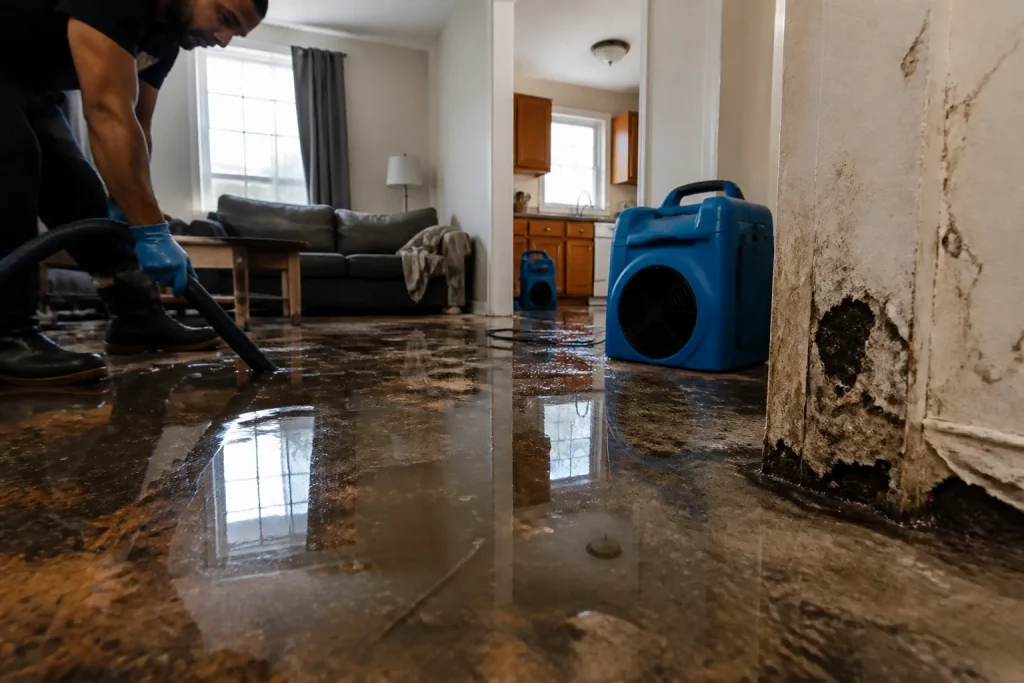
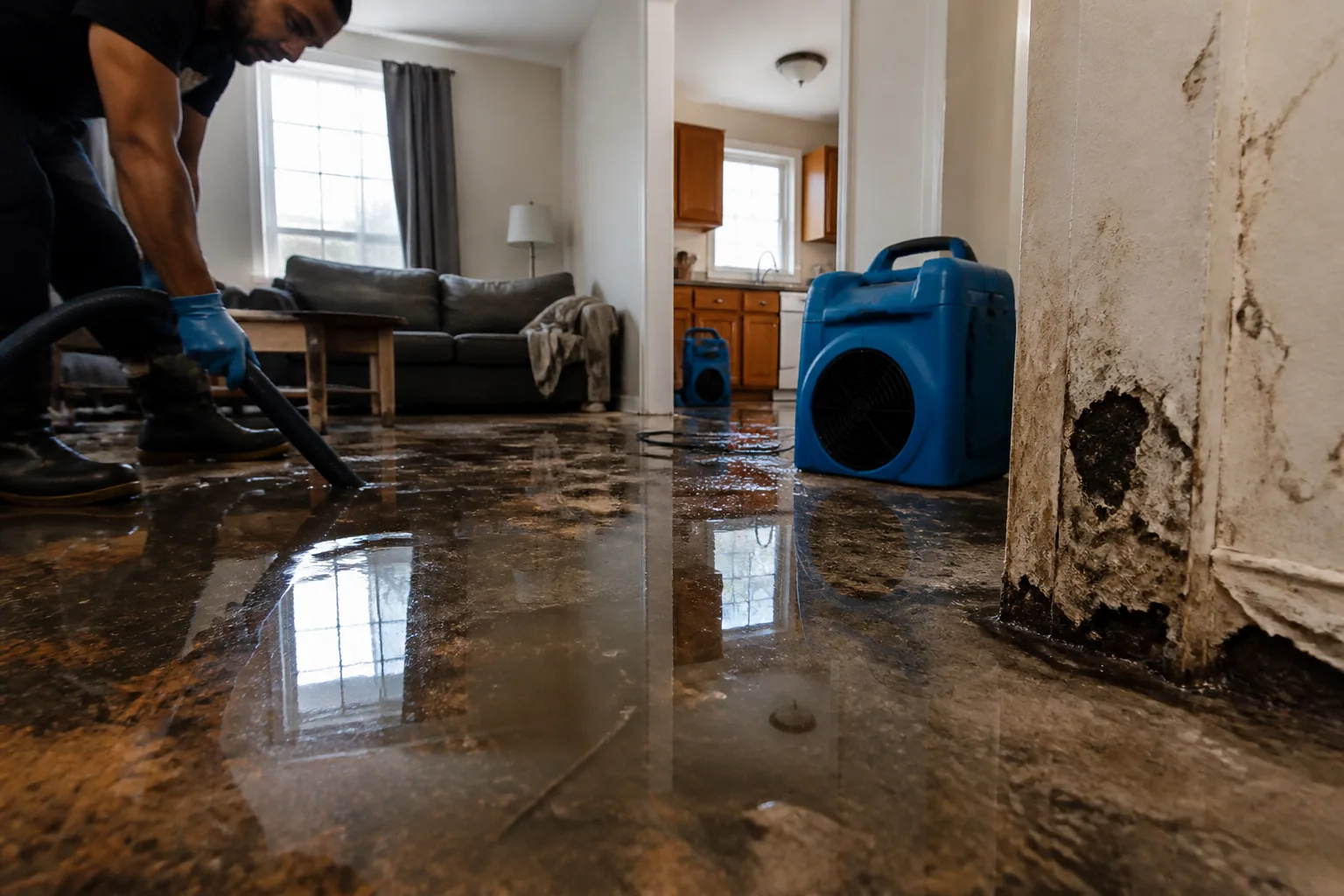
Emergency Water Damage Restoration Near Me: What East Flatbush Homeowners Should Do First
If you have standing water in your East Flatbush home right now, the first 30 minutes matter more than the next three days. Stop the water source, cut power to the affected rooms, photograph the waterline before touching anything, open a claim with your insurer, then call a certified restoration crew. If you’d rather not handle any of that alone, call (518) 750-3137 and a live dispatcher will walk you through it.
Mold can begin colonizing wet drywall within 24 to 48 hours. But the most costly mistake we see in East Flatbush isn’t delayed extraction. It’s homeowners throwing away wet materials or running box fans before anything is documented, which hands the insurance carrier a reason to dispute the claim. This guide covers the minutes before the crew arrives, because those minutes are yours to control.
If you’re reading this with water still rising, skip ahead to the five-step sequence below. Then call. We answer the phone at two in the morning the same way we answer it at two in the afternoon: live, with a person who can dispatch a crew to your block.
The Five Steps That Actually Matter in the First 30 Minutes
Most water damage advice online starts with “call a professional.” That’s true. But the order of operations before that call determines how your claim unfolds. Here is the sequence we’ve learned over 42 years of answering emergency calls in Brooklyn, and it rarely appears in one place on any other restoration site.
- Stop the source. Shut the main valve if it’s a supply line, the breaker if it’s a linked appliance, the building shutoff if it’s a common line in a rowhouse. You cannot assess anything until the water stops entering the space.
- Cut power to the affected areas only. Do not stand in water to reach a panel. If the panel is dry and you can safely reach the breakers for the wet rooms, shut them. If you cannot reach the panel without stepping through water, call your utility provider and keep everyone out of the space.
- Photograph everything at the waterline before moving a single item. The waterline on baseboards, drywall, and furniture legs is evidence. So are water stains that terminate mid-wall. Your adjuster needs these photos to establish the extent of loss. Move nothing until you have them.
- Call your insurance carrier and open a claim number. Do this before calling a contractor on a covered loss. The claim number anchors the file, and the timestamp on your first call becomes part of the record.
- Call a certified restoration contractor. The crew that starts extraction the same visit, runs the moisture map, and logs daily readings is the crew that protects your claim weeks later.
In East Flatbush, steps one and two get complicated fast. Basement apartments with a single egress, shared sewer lines in attached rowhouses that back up into neighboring units, old cast-iron waste stacks that crack under pressure. We’ve had calls where the water was coming up through the floor drains in the basement on Snyder Avenue while the homeowner was still checking the kitchen sink. That’s a municipal line backing up, not a supply leak. If you’re not sure where the water is coming from, say so when you call. It changes which equipment the crew puts on the truck.
What Not to Do in a Flood Scenario (Most Online Advice Gets This Wrong)
Two pieces of common DIY advice cause the majority of secondary damage and claim disputes we correct in East Flatbush. Neither one appears on the big-box store checklist.
Do Not Run Household Box Fans to “Dry Things Out”
A box fan moves air but does not remove moisture. In a flood scenario, it does something worse. Water that has touched a sewage or overland source is potentially contaminated. A box fan pointed at that water aerosolizes whatever is in it and pushes it through the home’s air pathways. That includes HVAC returns. We’ve walked into homes in East Flatbush where a well-meaning neighbor’s box fan spread mold spores into rooms that were never wet. Professional drying uses contained, directed airflow with actual dehumidification, not open-air turbulence.
Do Not Shop-Vac the Floor and Call It Progress
A shop vacuum removes surface water. That’s it. Water in a saturated subfloor cavity, under a finished basement slab, or wicked into the bottom plates of walls continues to climb for days. A dry-looking floor reads as “addressed” when it is not. The moisture map we run on day one with a Dri-Eaz meter shows what the surface hides: a wet-to-dry gradient in the subfloor that needs injector drying with an Injectidry system, directed airflow from Phoenix airmovers, and desiccant or refrigerant dehumidification. If the floor was stripped of water but the cavity underneath stays wet, you have a mold colony forming invisibly for two weeks before anyone notices. The shop-vac created a false sense of progress.
What Does “24/7 Emergency Response” Actually Mean in East Flatbush?
Every restoration company claims it. Very few define it. Here’s the practical difference, because at 2 a.m. on a Tuesday with water running across the floor of an East Flatbush cellar apartment, the difference is the whole ballgame.
A recording that asks you to leave a message is not emergency response. A call center that says “we’ll have someone call you in the morning” is not emergency response. Real 24/7 response means a live dispatcher answers, starts a work order, and sends a crew with a truck-mount extractor in the direction of your block that hour. It means the extraction actually starts on the same visit, not the next day.
We built Floodline Restoration Co. around a dispatch board, not a sales desk. The person who answers at midnight is the same person who can see which trucks are where and reroute one to you. That’s the standard to ask for when you call any company in the middle of the night: “Is there a live person dispatching a truck-mount extractor right now, or am I booking an appointment?” The answer tells you everything you need to know.
The Moisture Log: Why Initial Readings Make or Break an Insurance Claim Weeks Later
This is the piece no homeowner knows to ask for, and the piece that determines whether a secondary damage claim gets paid. When the first crew arrives, the first moisture readings they take become the baseline for everything after. The timestamp on those readings matters.
Here is a real scenario from the East Flatbush rowhouses off New York Avenue. A homeowner discovered water in a finished basement on a Saturday. The restoration company they called extracted the water Monday. They pulled baseboards, set up equipment, and things looked weeks later like they had worked. Except the first crew documented initial moisture levels in the wall cavities and subfloor in a way the adjuster later questioned. The timestamped readings taken on the first visit did not match the timeline the homeowner had described. The secondary damage claim, the mold bloom behind the drywall that showed up a month later, was denied because the initial documentation did not establish that the moisture had been present where the mold eventually appeared.
A proper moisture log starts on the first visit and continues daily. Readings are taken with a calibrated moisture meter at consistent points: the bottom plate of each affected wall, the slab or subfloor in a grid, the lower drywall sections, and inside wall cavities where drying requires injection. The log is handed to the homeowner and the carrier. It shows that drying met the dry standard before the equipment came out. That log is your evidence. Without it, you are negotiating a claim with your memories. With it, you have a written record.
This is also where the Water Damage Restoration in East Flatbush crew earns its keep. The same certified technicians who run the moisture map on day one handle the daily readings and hand you the log. No mid-job handoff to a different company that has never seen your walls. The person who reads the map is the person who stands behind the drying.
East Flatbush-Specific Risks You Should Tell the Contractor Immediately
Every neighborhood in Brooklyn has water damage patterns that repeat. East Flatbush has a few that no out-of-area crew will clock without being told. Mention these in the first phone call and you’ll save hours of diagnosis.
Basement apartments with single egress. Many East Flatbush homes have ground-level apartments with one door and small windows. In a flood, that single door is the only way out, and it’s also the water’s way in. The contractor needs to know about the egress situation before the crew arrives, because the safety sequence changes when the only exit could be blocked by rising water. If you have occupants in a basement unit, they leave first. Everything else can wait.
Shared sewer lines in attached rowhouses. East Flatbush has a long run of attached brick rowhouses, particularly south of Church Avenue toward the city line. They often share lateral sewer connections. A backup in one unit can present itself first in the neighbor’s floor drain. When we get a call about water coming up from drains in one attached home, we ask about the house on either side. A shared lateral that backs up is not a private plumbing issue; it’s a municipal one, and the scope of the claim depends on knowing that early.
Cast-iron waste stacks and original plumbing. Many of the homes in East Flatbush are prewar construction, and a lot of the original cast-iron waste lines are at the end of their service life. When those fail, they tend to fail in the wall or under the slab, which means the first sign is standing water in a finished space, and the fix is not a simple supply-line shutoff. We have pulled wet drywall off the walls on streets off Utica Avenue to find a hairline crack running the length of a vertical waste stack that had been seeping for weeks. If your house is prewar and you have not replaced the waste lines, tell the contractor that on the first call.
When the scope goes beyond extraction and drying, the same crew that handled the emergency handles the Fire & Smoke Damage Restoration procedures for any electrical or structural damage that the water exposed, and the rebuild if the damage requires it. One crew, one work order, one line of accountability.
How the First Visit Should Go: What a Real Emergency Response Looks Like
When the crew arrives, the order of operations on our end follows the same discipline. You should expect this from any certified restoration company you call in East Flatbush, and if you don’t see it, ask why.
First comes extraction. Not after a walkthrough, not after a sales presentation. A truck-mount extractor is pulling water out of your floors and walls while the technician is still wearing your doorbell’s chime off. The walkthrough and the moisture mapping happen while extraction is running. Then comes directed airflow and dehumidification. The equipment comes out of the truck in this order: extraction, then targeted airmovers, then dehumidifiers sized to the cubic footage of the affected space. In harder-to-dry cavities, an Injectidry system pushes dry air into wall and subfloor spaces that other equipment cannot reach. The equipment list on our trucks runs to Dri-Eaz extractors and dehumidifiers, Phoenix airmovers, B-Air dryers, XPOWER for airflow. You don’t need to know the brands. You need to know the equipment exists and that the crew knows how to use it.
The daily readings continue until the drying standard is met. The moisture log gets handed to you and to your carrier. If the water affected drywall that sits against masonry, drying takes longer and requires patience. If the water came from a sewage backup, the affected materials are cut out and the space is cleaned and disinfected before drying begins. In that case, Mold Remediation in East Flatbush protocols come into play alongside the drying, because the window for mold prevention is shortest when the water is contaminated.
We pulled one out of a garage over off Church Avenue last spring where the homeowner had spent two days trying to manage the extraction himself with a rental carpet cleaner. He called us when the drywall started showing brown at the bottom. The initial moisture reading in the subfloor was off the scale the morning we arrived. Two days of a shop-vac had done nothing for the cavity under the slab. The fix took a week of injection drying and two replacement drywall panels. The lesson: the equipment matters more than the effort, and the baseline reading matters more than either.
That’s the standard to hold any company to. If the first phone call is a recording and the first visit is a sales pitch instead of an extractor, you’re talking to the wrong outfit. We answer the phone with a live dispatcher, every hour of every day. That’s not a marketing line. It’s the job. When an East Flatbush homeowner calls us at three in the morning with water coming through the ceiling of a first-floor apartment, someone picks up and starts routing a crew from wherever the nearest truck is. That’s the whole business model: a live person, a truck-mount extractor, and a moisture log started on the first visit. The rest of it is just doing the job until it’s done.
The Bottom Line
The first 30 minutes after you find standing water in your East Flatbush home are the only part of the restoration process you control entirely. Stop the source. Cut power safely. Photograph the waterline before moving anything. File the claim. Then make one phone call. What you don’t do matters as much as what you do: no box fans, no shop-vac false progress, no throwing away wet materials before they are documented. A proper emergency response means a live dispatcher, a truck-mount extractor on the same visit, and a moisture log that starts the moment the first reading is taken and continues daily until the dry standard is met. Anything less puts your home, your health, and your insurance claim in the hands of the wrong process.
If you’re in East Flatbush and need help, Floodline Restoration Co. offers free estimates. We stand behind every job with a written 90-Day Done Right Promise. Call (518) 750-3137 now and a live person will answer.
Frequently Asked Questions
With Floodline Restoration Co., a live dispatcher answers immediately, 24 hours a day, every day, and starts routing a certified crew with a truck-mount extractor toward your East Flatbush address. The time to arrival depends on where the nearest truck is, but the call is answered in real time and the dispatch happens on that same call, not on a callback. Call (518) 750-3137 and we’ll tell you the estimated arrival window.
Coverage depends on your specific policy. A sudden and accidental burst pipe is typically covered under a standard homeowner’s policy. A sewer backup often requires a separate endorsement or rider. The most important step is to open a claim number before doing anything else, and to document the waterline with photos before moving anything. We work directly with your adjuster and bill the carrier directly, so you’re never the messenger.
Surface water removal is not the same as drying. Water in subfloors, wall cavities, and under slabs cannot be removed with a shop vacuum. Without professional extraction and moisture-mapped drying with equipment like Dri-Eaz or Phoenix units, mold becomes likely within 48 hours, and hidden damage continues to spread. A proper moisture log started on the first visit also protects your insurance claim if secondary damage appears weeks later.
Floodline Restoration Co. deals with the adjuster directly. We document the damage with photos, run the moisture map, keep daily readings, and hand the moisture log to you and your carrier. We bill the carrier directly, so the financial conversation happens between us and the insurance company, not between you and a claims department. That’s part of the square deal: no surprises on the bill, and no homeowner playing messenger.
Written by Curt Bowman, Owner at Floodline Restoration Co., serving East Flatbush since 2010.
Need Damage Restoration Help?
Call Floodline Restoration Co. - licensed & insured, here with fast after-hours help in East Flatbush.
(518) 750-3137