
Free visual inspection and a written scope of work before any mitigation begins - photos, moisture readings, and drying logs go in your claim file
The scope we write is the scope we bill. Anything new gets shown to you, in writing, before we touch it.
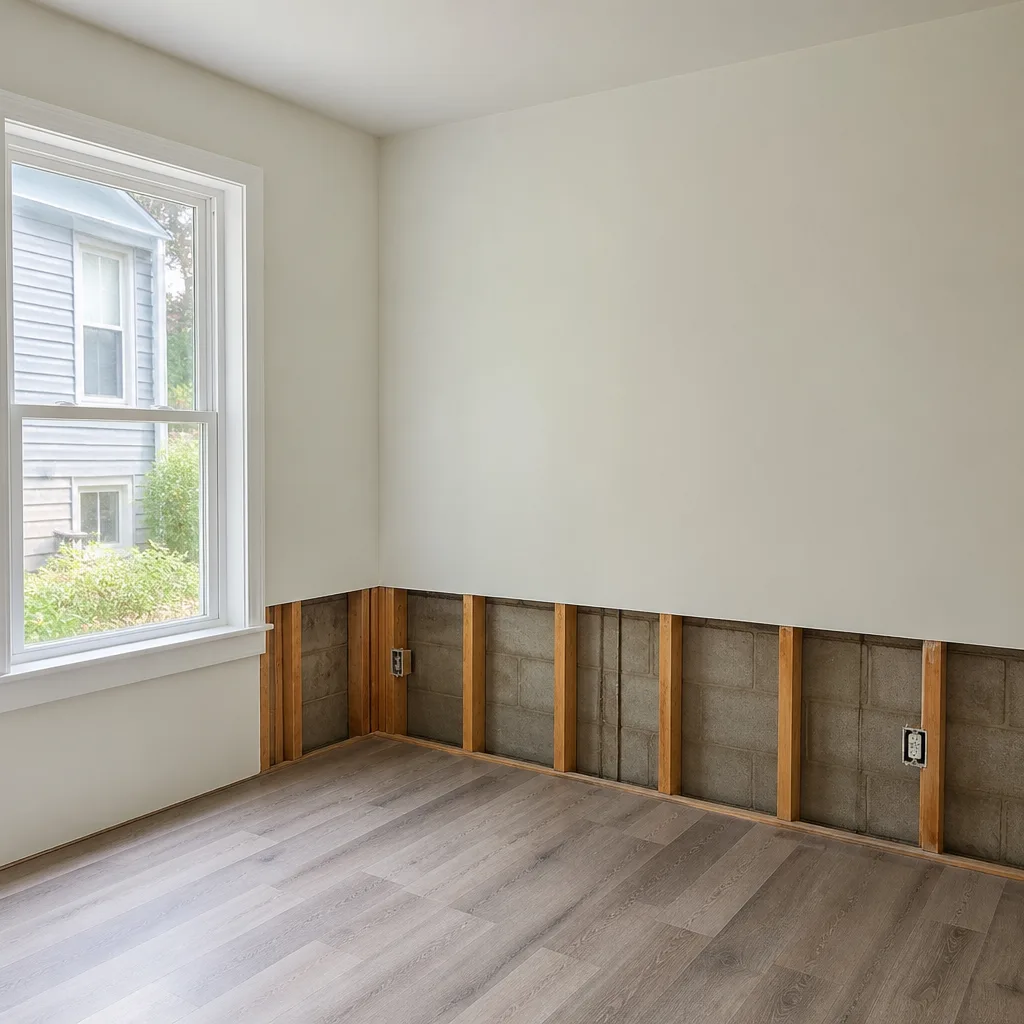

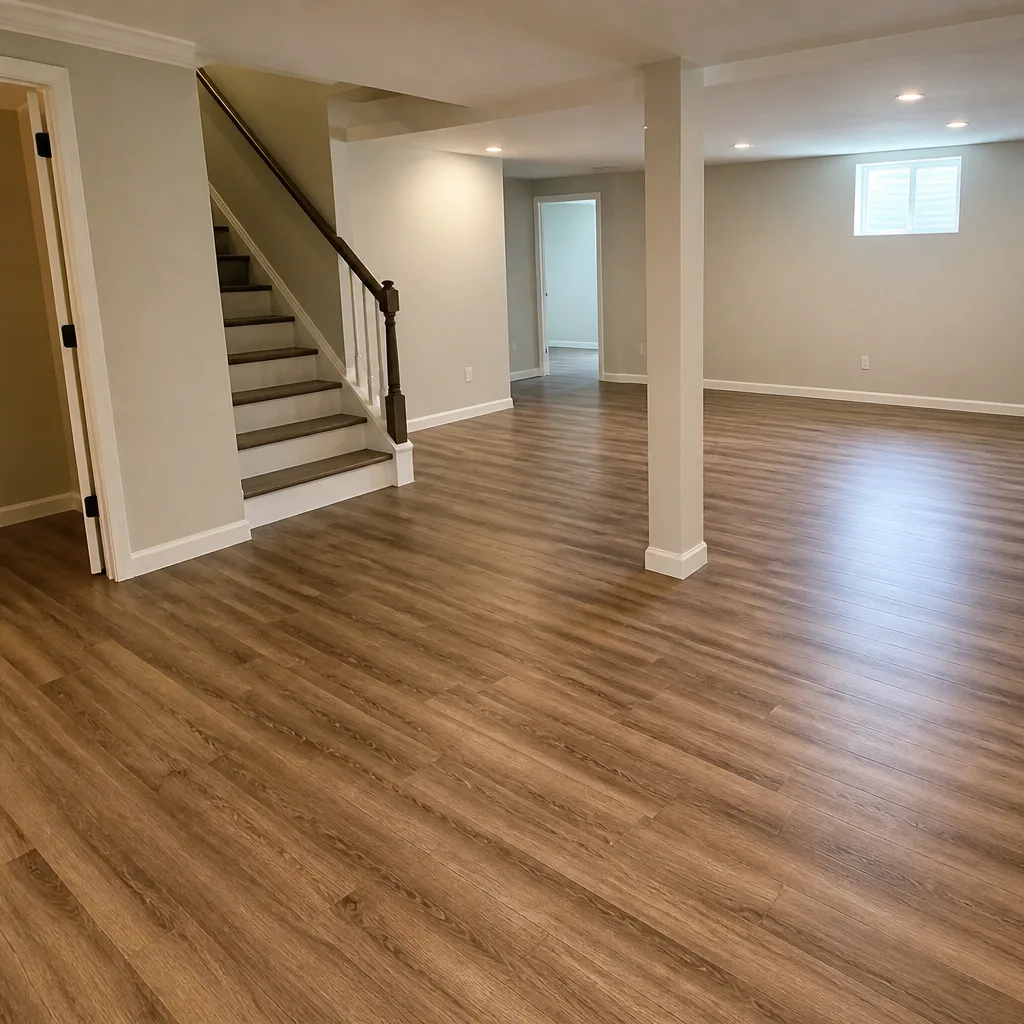
 Before
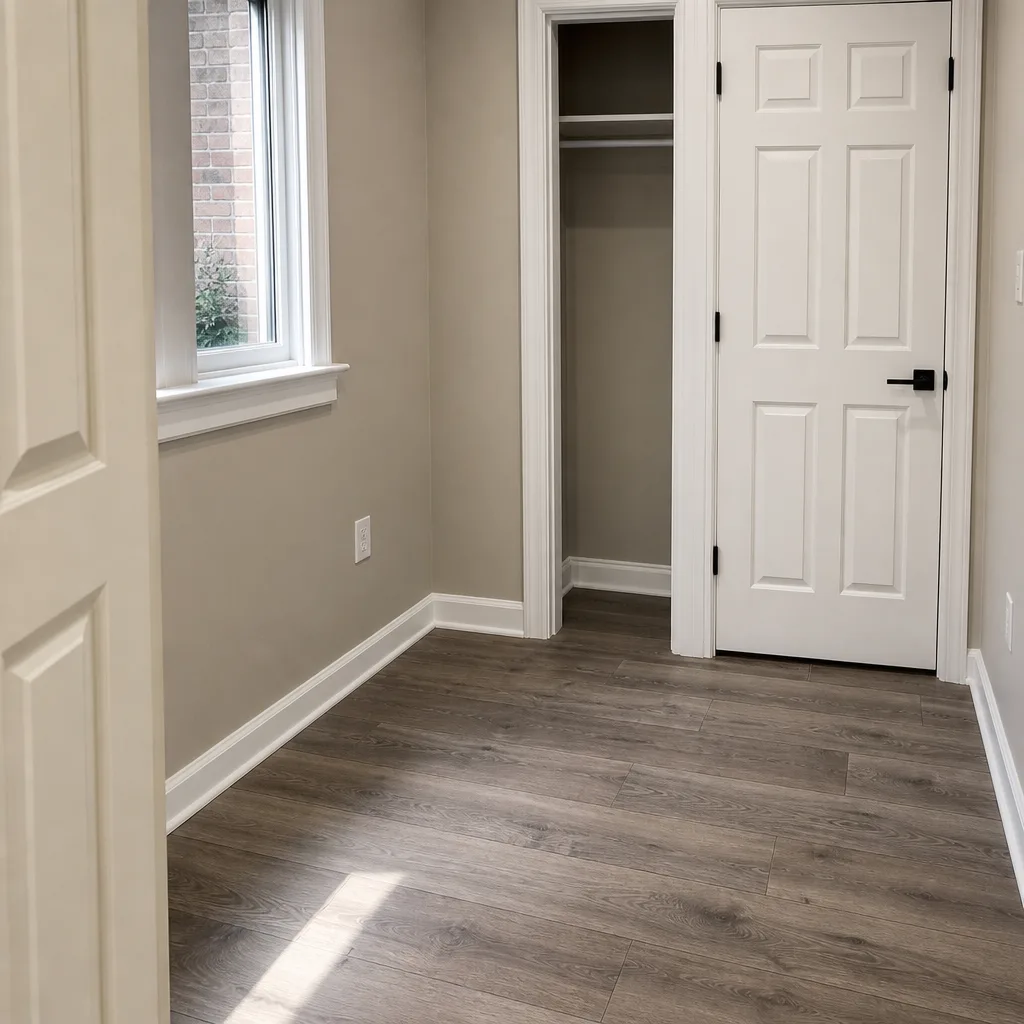 After
After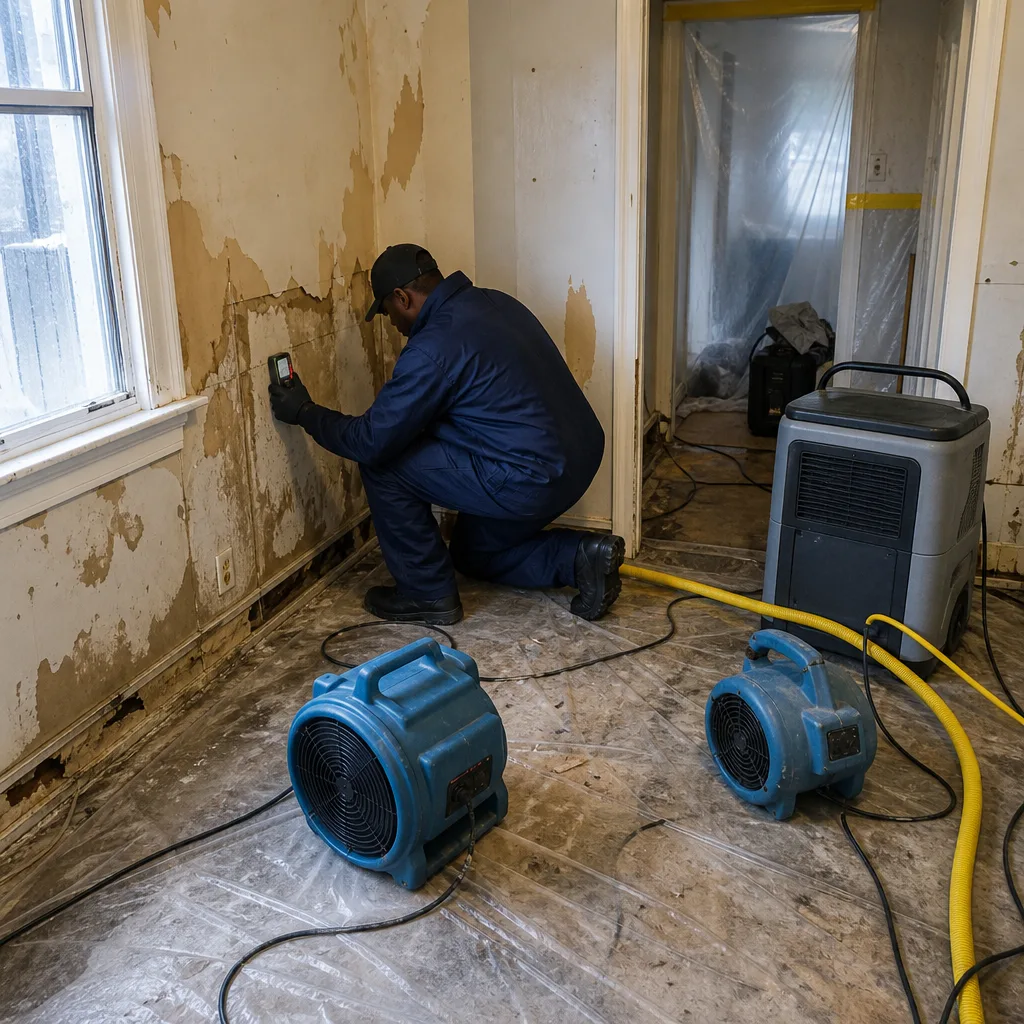 Before
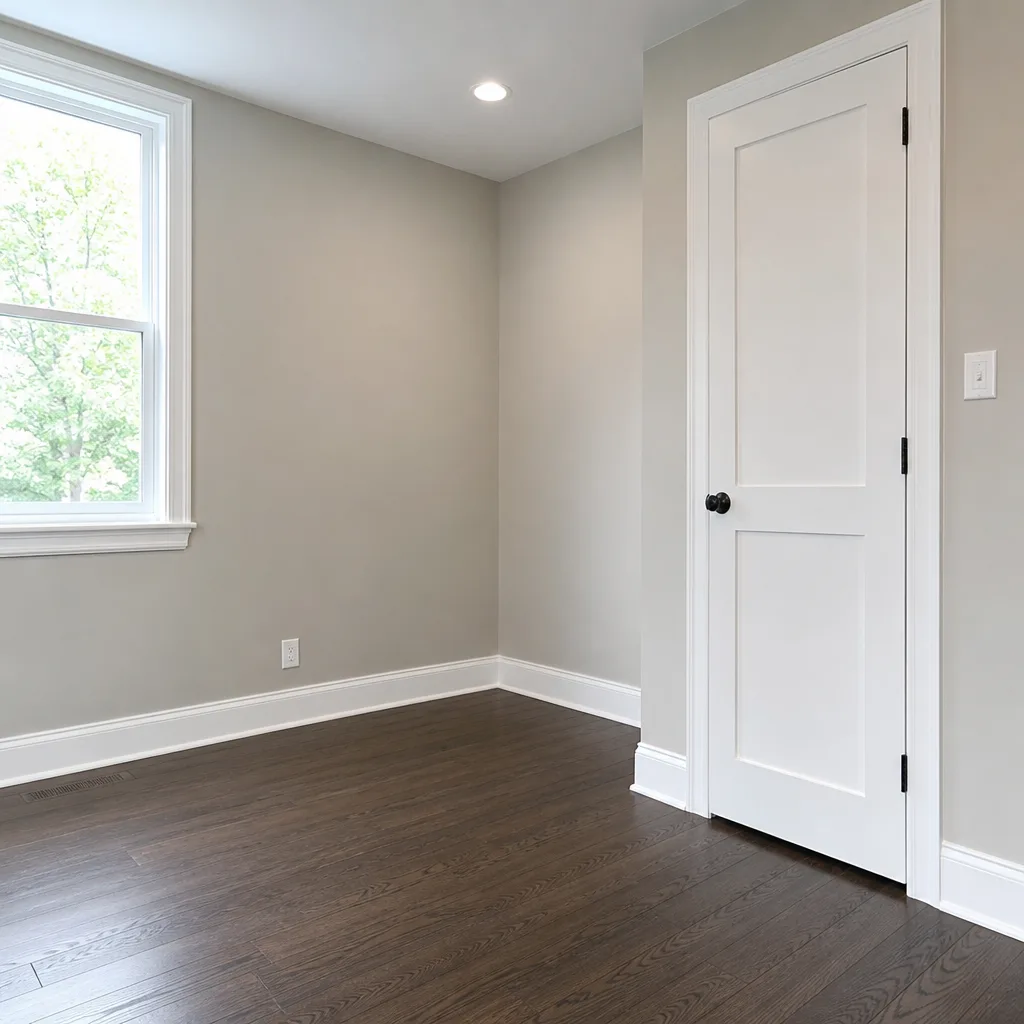 After
After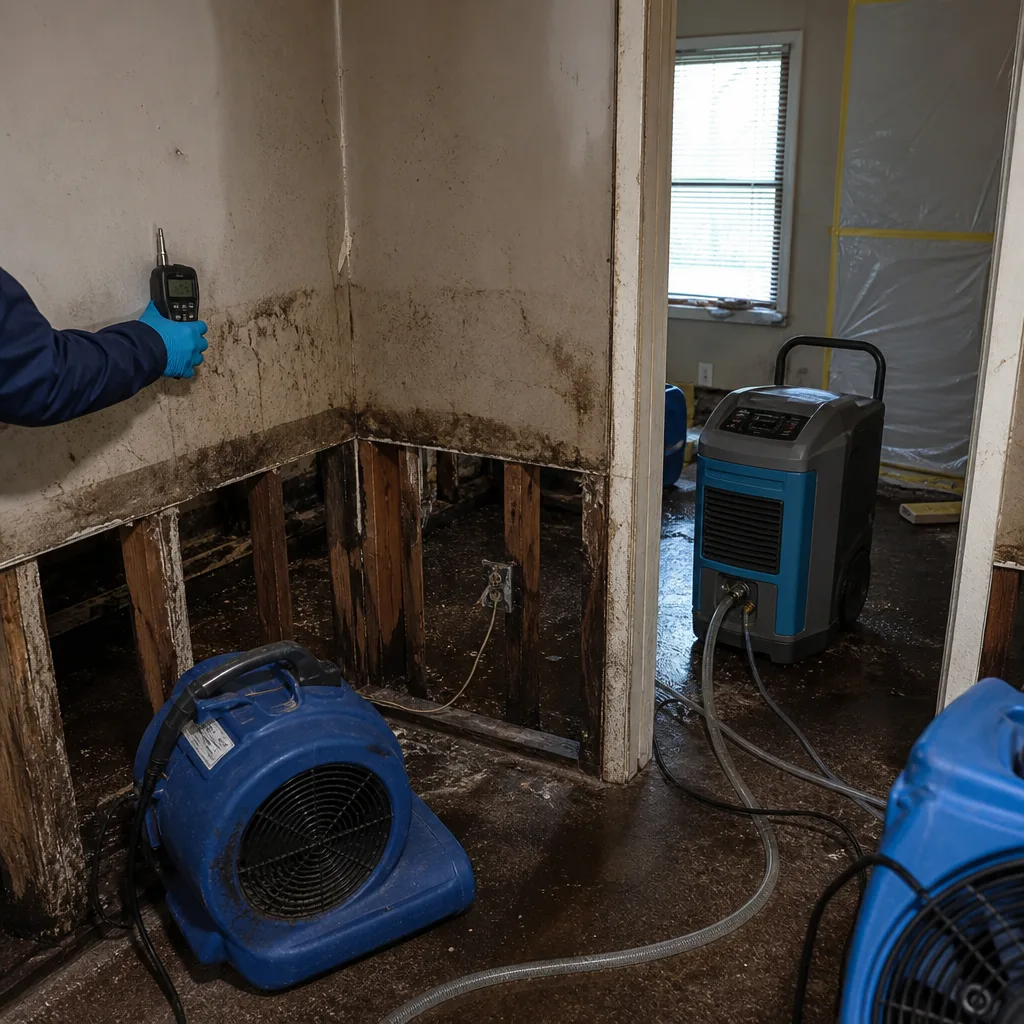 Before
 After
After24/7 Emergency Sewage Cleanup in Flatlands
When sewage backs up into a Flatlands basement, the clock starts before the water stops rising. Our crews respond to sewage emergencies across Flatlands within 45 minutes, day or night. Call (518) 750-3137 and a live dispatcher answers. Not a recording, not a call center queue. A person who knows the difference between a Category 2 and Category 3 loss and starts routing a certified crew toward your block while you’re still on the phone. The first hour after a sewage release determines whether you’re facing a contained cleanup or a full gut-and-rebuild. In Flatlands, where the water table sits high and basements are finished, that first hour matters even more. We arrive, assess, extract, and start drying in the same visit.
Understanding Sewage Cleanup Severity in Flatlands Properties
Not all sewage water is equal. The IICRC classifies water into three categories. Category 1 is clean water from a supply line. Category 2 carries significant contamination, like washing machine discharge. Category 3, what we call black water, contains pathogens, fecal matter, and often whatever the street contributed on the way in. In Flatlands, the category matters enormously because of what sits below the slab. Most one- and two-family brick homes here, built between the 1940s and 1960s, have finished basements retrofitted without modern waterproofing. Those cavities behind drywall and under fiberboard paneling absorb Category 3 water and hold it against 70-year-old brick and cinder block. Moisture mapping in these structures regularly finds saturation extending three to five feet beyond the visible stain line. Extraction alone cannot fix that. It takes containment, removal of wicking materials, extended structural drying, and repeated moisture readings before those cavities release what they’ve absorbed. Flatlands’s chronic high water table means the masonry itself never fully dries to the low readings you’d get in an unfinished poured-concrete basement on higher ground.
Why Flatlands Property Owners Choose Floodline Restoration Co.
- 45-minute response commitment in Flatlands. Our dispatch board routes the nearest certified crew to your block immediately, not the next morning. We’ll be there when we say.
- Live answer, 24/7. A real person picks up at 2 a.m. That’s not a promise we hedge. Try us at any hour and you’ll get a dispatcher, always.
- IICRC-certified crews. Our technicians hold WRT (Water Restoration Technician), FSRT (Fire & Smoke), and AMRT (Applied Microbial Remediation) certifications. They know Category 3 water and the contamination profile of sewage in your specific part of Brooklyn.
- Free visual inspection. Before any money changes hands, we look at the loss and tell you honestly what needs to happen. No games.
- Direct insurance billing. We document from hour one and bill your carrier directly. You don’t play messenger between us and an adjuster.
- One team from extraction to rebuild. No mid-job handoff to a sub nobody introduced. The same background-checked, uniformed crew that pulls the sewage water also rebuilds the room.
Our Sewage Cleanup Process
Inspection & Assessment
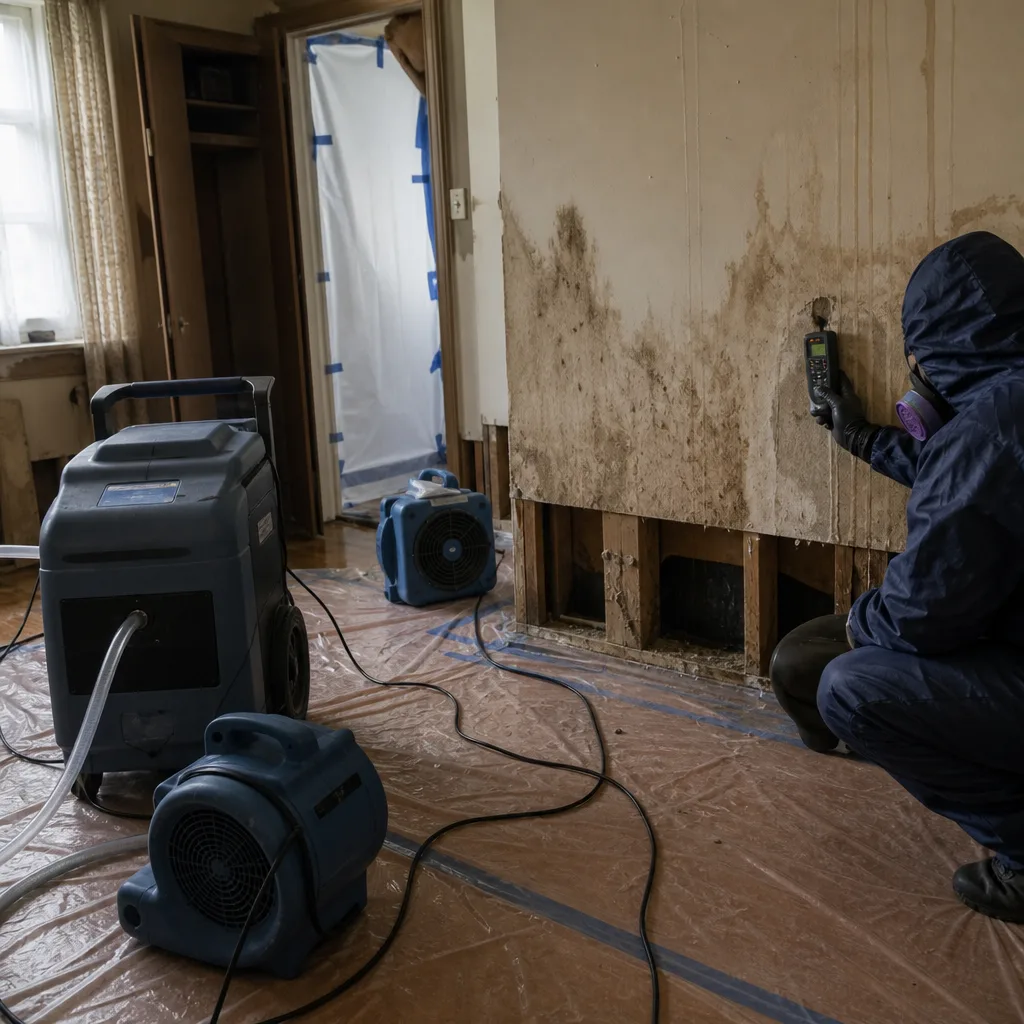
We map the full extent of the loss with thermal imaging and moisture meters, not just where water is visible. In Flatlands homes, this means checking the original brick and mortar below grade, not just the finished surfaces. We give you a written scope before work starts, based on what we find.
Extraction & Stabilization
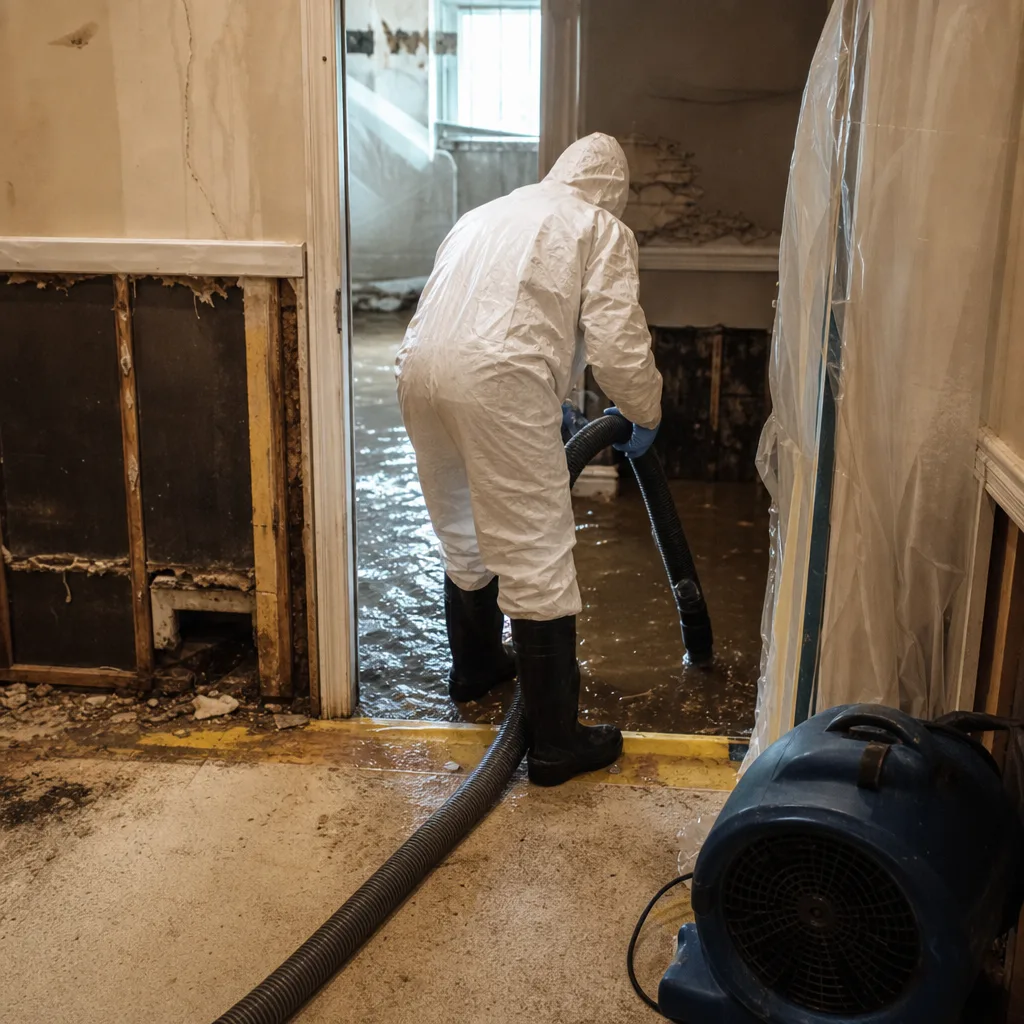
Black water comes out first. We use truck-mounted extraction units and professional pumps to remove standing sewage quickly, before it migrates further into walls, baseboards, and slab plumbing chases. The goal is to stop the spread within the first visit.
Drying & Dehumidification
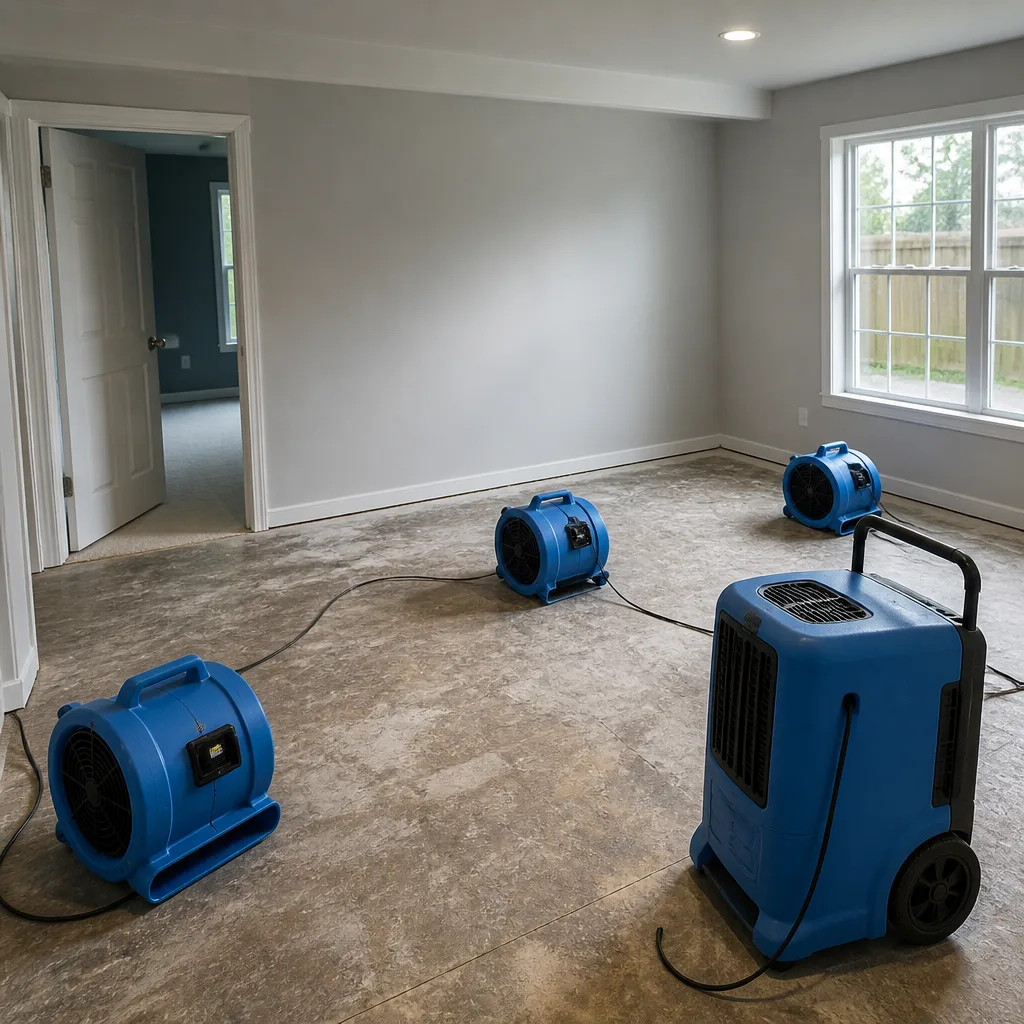
This is where Flatlands jobs differ from most of the country. High water tables mean masonry holds moisture for weeks unless we pull it out deliberately. We set Phoenix, XPOWER, and B-Air air movers and dehumidifiers and take daily readings until every surface hits the dry standard, not just until the air feels dry.
Cleaning & Sanitization
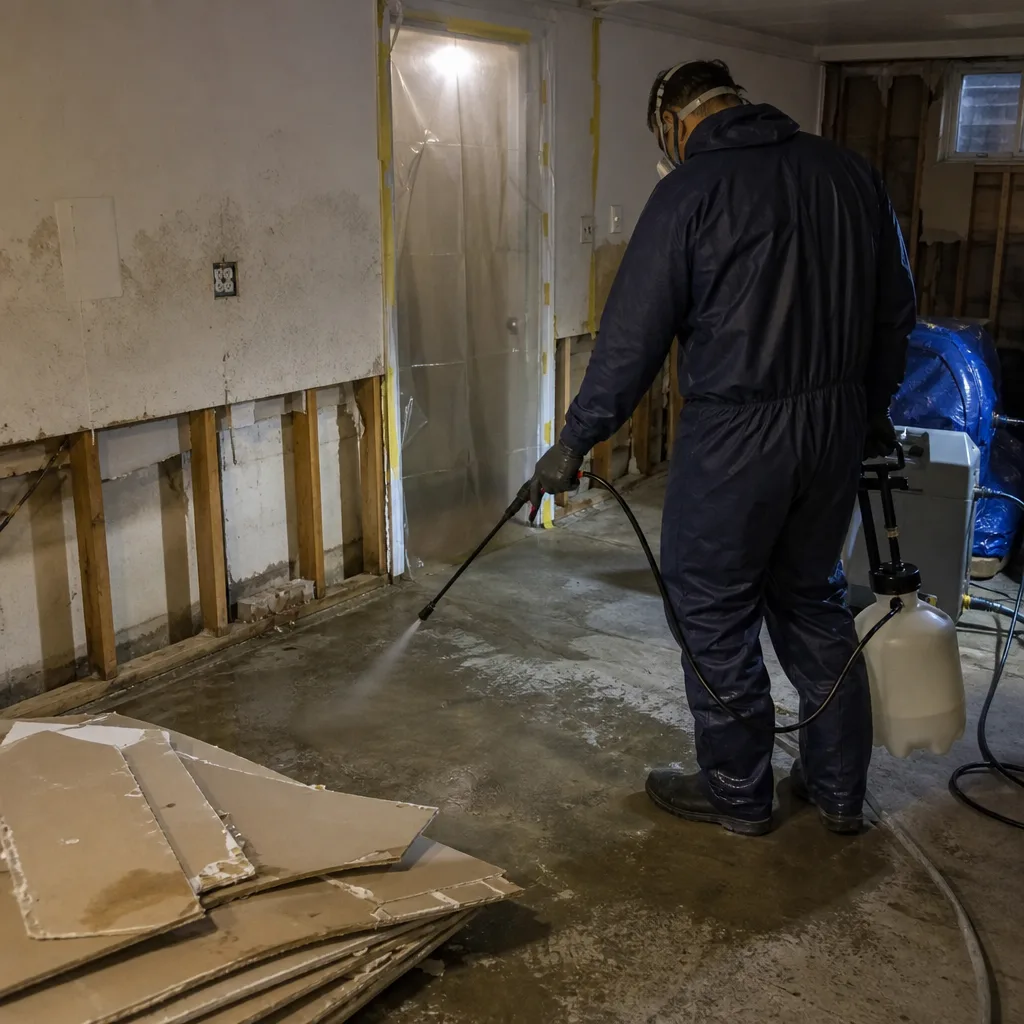
After removal of contaminated materials, we clean all affected surfaces with professional antimicrobial treatments suited to Category 3 water. This is not a wipe-down with bleach. It’s a methodical process documented room by room.
Crawl Space & Below-Grade Treatment
Flatlands crawls spaces trap sewage vapor and standing contamination longer than open basements. We remove contaminated soils and insulation, treat structural wood, and verify the space is dry before sealing it back. If it’s not dry below, it’ll stink upstairs within a week.
Repairs & Restoration
We rebuild what had to come out: drywall, flooring, baseboards, insulation. We don’t hand it off to a separate company. The same crew that did the extraction sees the job through to paint and trim.
Need Emergency Sewage Cleanup in Flatlands Now?
Crews minutes away, answering live 24 hours a day. The sooner we start, the less it costs.
Working With Your Insurance Company
Sewage backup claims are covered under many Flatlands homeowners policies, but only if the documentation holds up. We start documenting in the first hour: photos of standing water, the source of the backup, the rooms affected, every step. Our estimates follow industry-standard software formats that adjusters recognize. We talk to your carrier directly. If the adjuster asks about moisture readings on day three, we send the log. If they question whether that subfloor really needed to come out, we send the photos. The Sewage Cleanup team at Floodline Restoration Co. has handled more of these conversations than most homeowners will ever face. We don’t leave you to argue coverage alone.
What We Provide Your Insurer
- Thorough documentation of the loss
- Photos of all damage, room by room
- Moisture readings and drying logs
- A detailed, line-item scope of work
- Direct coordination with your carrier
Built for Flatlands’s Loss Calendar
Sewage losses in Flatlands don’t happen randomly. They follow the weather and the tides. Nor’easter season from October through March pushes Jamaica Bay water into combined sewer lines that then back up into basements along the lower-elevation blocks near the bay. January deep freezes crack aging clay and cast-iron waste lines under 1940s and 1950s homes, letting groundwater and sewage mix below the slab. Spring thaw, combined with a high water table, saturates foundation drains and finds every gap in a retrofitted basement wall. Summer thunderstorms hit fast and overwhelm street drains already taxed by Flatlands’s flat, impervious landscape. Any one of these events can push Category 3 water into a finished basement. Knowing the calendar lets us pre-position crews and equipment when a nor’easter is forecast. But the phone rings 24/7 regardless, and we answer when it does.
Sewage Cleanup Across Flatlands’s Neighborhoods
Response routes in Flatlands run down Flatbush Avenue, along Avenue K, and over to Ralph Avenue, and every stretch has its own character for a sewage loss. The blocks east of Flatbush toward the old airstrip at Floyd Bennett Field sit lower and closer to Jamaica Bay, so we see more bay-driven backups there than anywhere else. The brick colonials around Avenue K and East 55th have shallow crawl spaces with dirt floors; sewage pools down there and wicks into original floor joists. Closer to Kings Plaza and the Mill Basin side, homes built along filled marshland hold groundwater so high that a sewage smell can reappear weeks after remediation if drying wasn’t completed properly. Every one of these areas responds differently to Category 3 water. That’s why our crews map moisture in the masonry itself, not just on the floor surface. The same cleanup that works in a Bensonhurst rowhouse won’t finish the job in a Flatlands colonial with a chronically damp below-grade foundation.
Flatlands sits at one of Brooklyn’s lowest elevations, abutting Jamaica Bay’s flood plain, with much of the neighborhood mapped in FEMA flood zone AE. Restoration work here is dominated by recurring storm-surge and groundwater flooding, not one-off pipe failures. Hurricane Sandy’s 2012 inundation left a legacy of hidden mold, compromised subfloors, and inadequate drying in mid-century brick homes that our crews still uncover during routine calls today. When we respond to a sewage backup in Flatlands, we assume groundwater and repeat contamination are in the mix until proven otherwise. It changes everything: how far we inspect, what materials we remove, and how long we run drying equipment.
Specialized Sewage Cleanup Services We Offer in Flatlands
Black Water Extraction
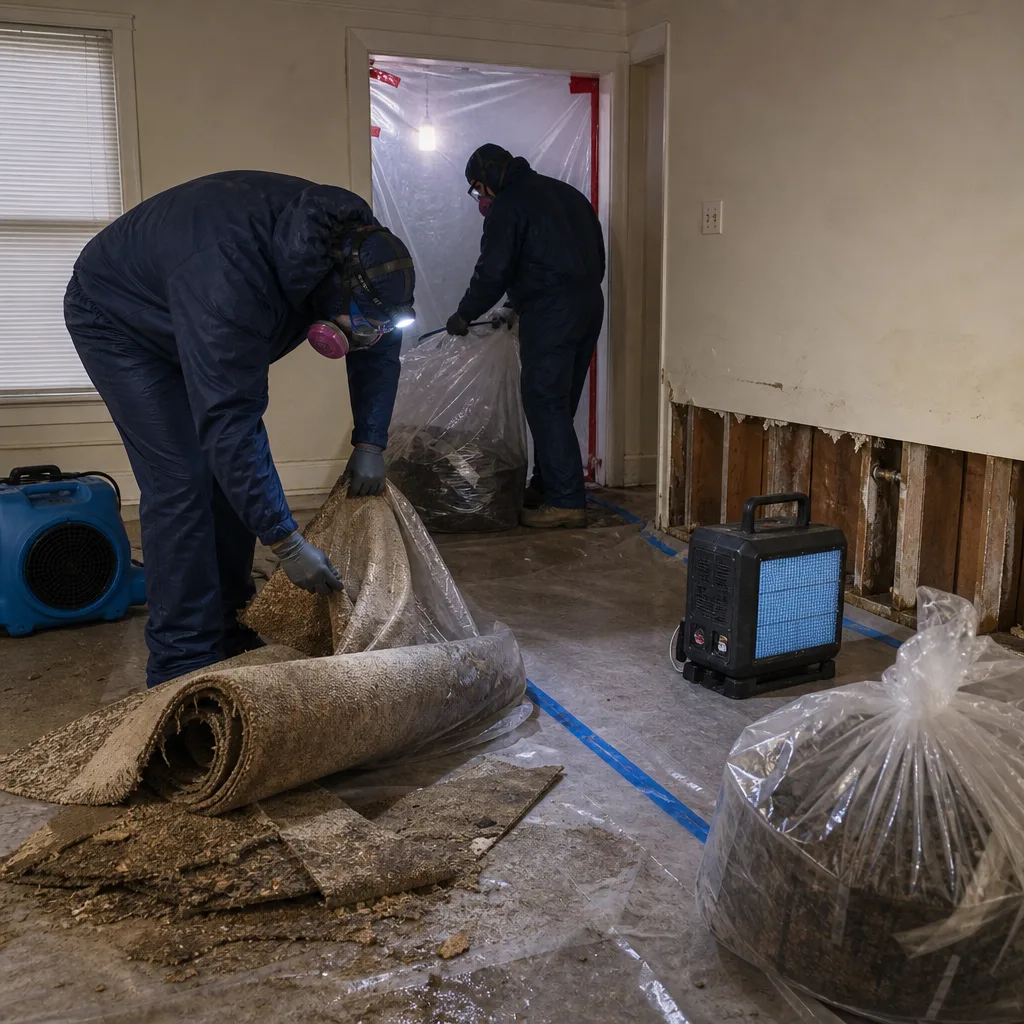
Category 3 water from surcharged sewer lines demands extraction equipment built for contamination, not just volume. We use truck-mounted units and containment protocols so sewage doesn’t aerosolize into living spaces. In Flatlands, where black water often mixes with bay water and groundwater, extraction starts immediately and continues until the slab, crawl space, and subfloor are clear.
Sanitization & Disinfection
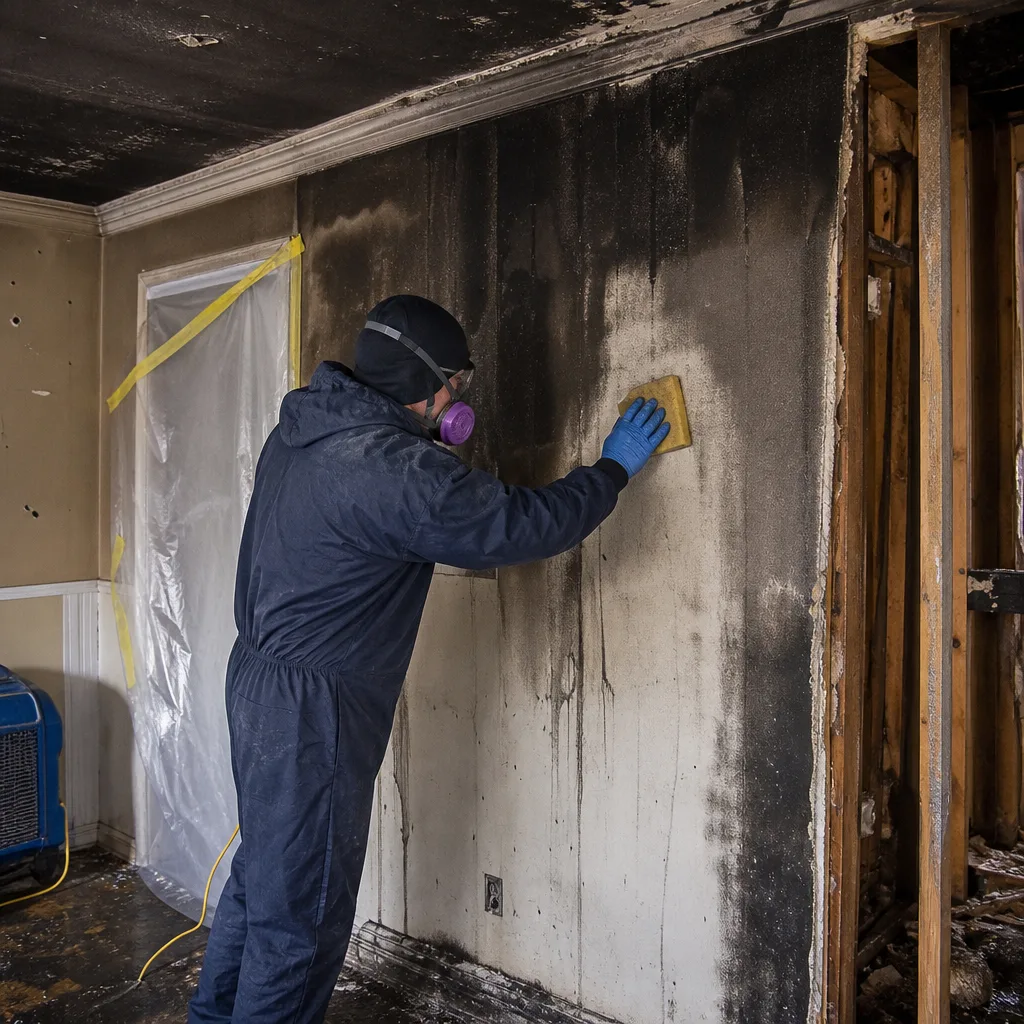
After extraction, every surface touched by Category 3 water gets antimicrobial treatment suited to the contamination profile. In Flatlands, that treatment has to survive a high-humidity, high-water-table environment long enough to do the job. We document every treatment so your insurer sees exactly what was done and where. The goal is a home that’s safe to live in, not just one that smells better for a week.
Crawl Space Sewage Removal
Flatlands crawl spaces are some of the worst spaces to dry in the five boroughs. Chronic groundwater, clay soils, and old floor joists combine to hold sewage contamination for weeks. Our crews suit up, remove contaminated soil and insulation, treat the framing, and verify with moisture meters before sealing the space. We’ve pulled sewage out of crawls on Avenue K and Avenue N that looked dry from the top but were still saturated inside the joist bays.
What happens when you call
- 1
A real person answersNo phone trees - you reach a local pro.
- 2
You get an upfront price rangeHonest numbers before anyone is dispatched.
- 3
A background-checked tech heads outLicensed & insured, dispatched right away.
- 4
You approve before work beginsNothing starts until you say go.
Sewage Cleanup Costs in Flatlands, NY
A straightforward sewage backup in a Flatlands basement, with extraction, sanitization, and drying, typically runs $2,800 to $5,500. Toilet overflow in a first-floor bathroom with no structural damage usually lands between $1,200 and $2,800. A full Category 3 crawl space removal with contaminated insulation and soil removal runs $5,000 to $12,000 depending on square footage and how far the contamination spread. What moves the price: how long the sewage sat, whether finished materials absorbed it, whether the original brick and mortar below grade is saturated, and whether the loss involves bay-driven water rather than an isolated pipe failure. Insurance covers most of these claims when the damage is sudden and accidental. For out-of-pocket work, the $50 Off Any Repair Over $250 and the Senior & Veteran 5% discount reduce the number. The free visual inspection turns all of this into a written line-item scope before you commit to anything. We stand behind that number. A square deal: no surprises on the bill.
We Also Serve Cities Near Flatlands
Our crews regularly respond across Flatlands and the surrounding neighborhoods: East Flatbush, Sunset Park, Bedford-Stuyvesant, and Bensonhurst. Same 45-minute target, same live dispatch, same written scope before work starts. The drive differs, the standard does not. Call (518) 750-3137 from wherever you are in Brooklyn and we’ll route the nearest ready crew.
Serving Flatlands, NY - Our Local Coverage Area
We’re based in the Flatlands area and know this community well. Use the map below to see our service coverage - if you’re nearby, we can almost certainly help.
Flatlands Sewage Cleanup Questions, Answered
How does living near Jamaica Bay change the sewage cleanup protocol for a Flatlands basement?
Homes near Jamaica Bay sit on a chronically high water table, so our crews assume masonry below grade is already damp before sewage ever enters. That means extended drying durations, more aggressive moisture mapping, and removal of materials that would be salvageable in a drier basement. Drying logs run longer here, sometimes two to three weeks, because the surrounding soil keeps feeding moisture back into brick and cinder block. Call (518) 750-3137 and we’ll explain what that means for your specific basement.
Why did my Flatlands home have sewage backup after just a moderate nor’easter?
Flatlands sits at a low elevation with flat topography abutting Jamaica Bay. Nor’easters push bay water into combined sewer lines, which then surcharge and back up into basements, especially in flood zone AE parts of the neighborhood. Moderate storms do here what severe storms do on higher ground. The hydrology of Flatlands is such that street flooding has nowhere to drain, and the sewer system can’t keep up. Expect this to keep happening until a check valve or backwater valve is installed, which we can quote during the cleanup.
What hidden sewage contamination is common in Flatlands’ post-Sandy brick homes?
Post-Sandy repairs in place often left moisture-wicking drywall and insulation behind baseboards and inside wall cavities. Those materials are pre-conditioned for rapid mold and sewage retention. When a new backup occurs, sewage finds those already compromised materials and contamination spreads faster than it would in a properly dried structure. We regularly open walls during a ‘small’ backup and find prior contamination nobody addressed. That’s why we inspect beyond the visible stain line.
How do you know when to remove vs. dry materials after a sewage backup in a Flatlands crawl space?
The rule is simple: if it’s porous and absorbed Category 3 water, it comes out. Insulation, fiberboard, carpet, and heavily saturated drywall go. Structural wood gets dried, treated, and tested. Flatlands crawl spaces complicate this because the high water table keeps wood damp for weeks. A moisture meter tells us when wood hits the dry standard. If readings won’t drop, we extend drying or remove the material. No guessing, no sanding over sewage contamination.
Is a sewage smell in a Flatlands basement during dry weather a sign of a past unresolved backup?
Yes. A dry-weather sewage smell in a Flatlands basement usually means past contamination is still trapped somewhere: behind baseboards, inside a wall cavity, or below the slab. The high water table and original 1940s-60s masonry hold that contamination and release odor when humidity rises. A free visual inspection with thermal imaging often reveals exactly where the old loss was. Call (518) 750-3137 and we’ll find it.
How fast can you actually get to a Flatlands home?
Forty-five minutes is the target from when you call. We dispatch from our New York City office with crews stationed for Flatlands response. Nor’easter nights get busy, but the dispatch board shows which crew is closest and we route accordingly. Call (518) 750-3137, a live person gives you the exact ETA for a real truck, not a call center estimate.
Will my insurance cover sewage cleanup in Flatlands?
Most Flatlands homeowners policies cover sudden and accidental sewage backup, often with a specific endorsement. We document everything from the first hour with photos, moisture logs, and line-item scopes that adjusters recognize. We coordinate with your carrier directly. Some policies exclude flood-driven backup, which is common in flood zone AE parts of Flatlands. The free inspection helps determine what you’re facing so you can talk to your adjuster with facts.
What should I do in the first 30 minutes after a sewage backup?
Shut off water to the affected fixture if you can do so safely. Do not flush toilets or run sinks. Keep children and pets away from the area. Do not use a shop vac on sewage, and do not try to dry it with a household fan. Call (518) 750-3137 and we’ll talk you through it while the crew is en route. The first 30 minutes of containment decisions determine whether your loss is a cleanup or a rebuild.
Written by Curt Bowman, Owner at Floodline Restoration Co., serving Flatlands and greater Brooklyn since 2010.