
Free visual inspection and a written scope of work before any mitigation begins - photos, moisture readings, and drying logs go in your claim file
The scope we write is the scope we bill. Anything new gets shown to you, in writing, before we touch it.
 Before
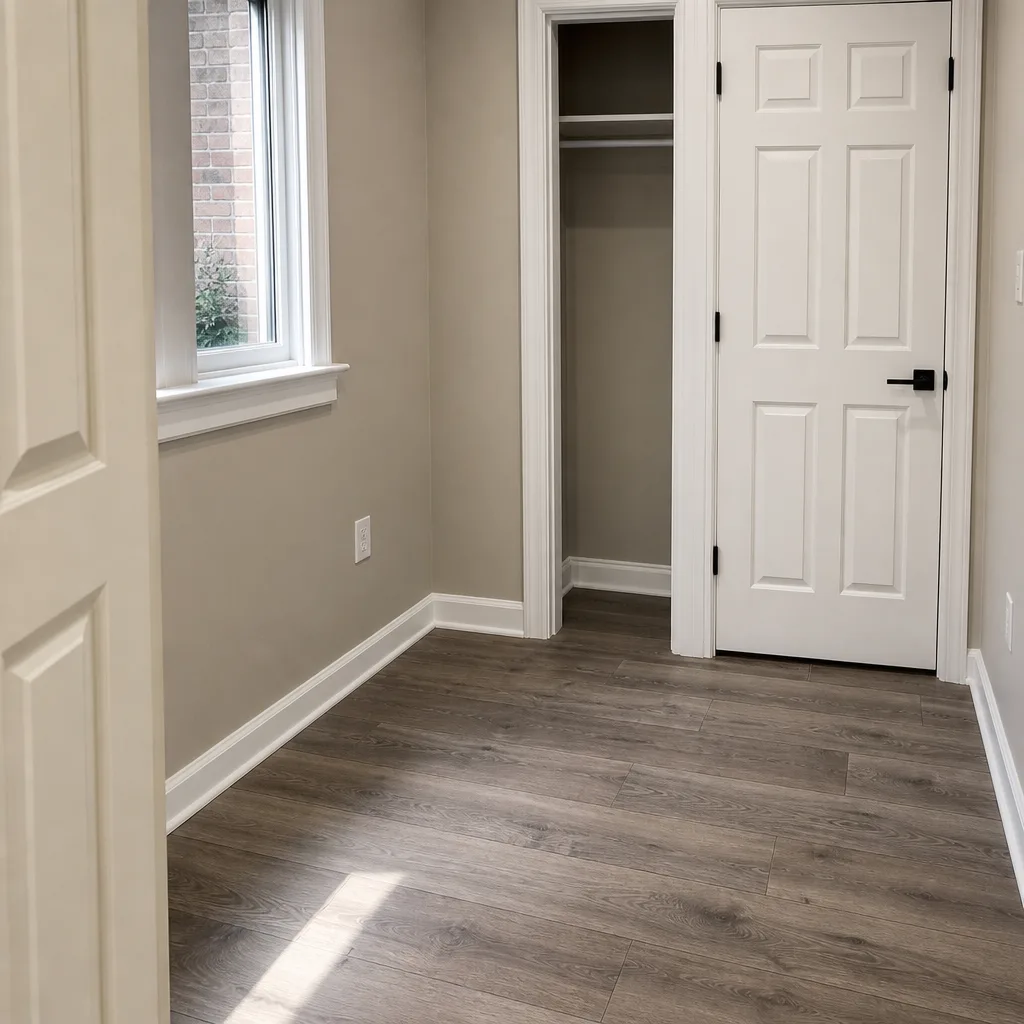 After
After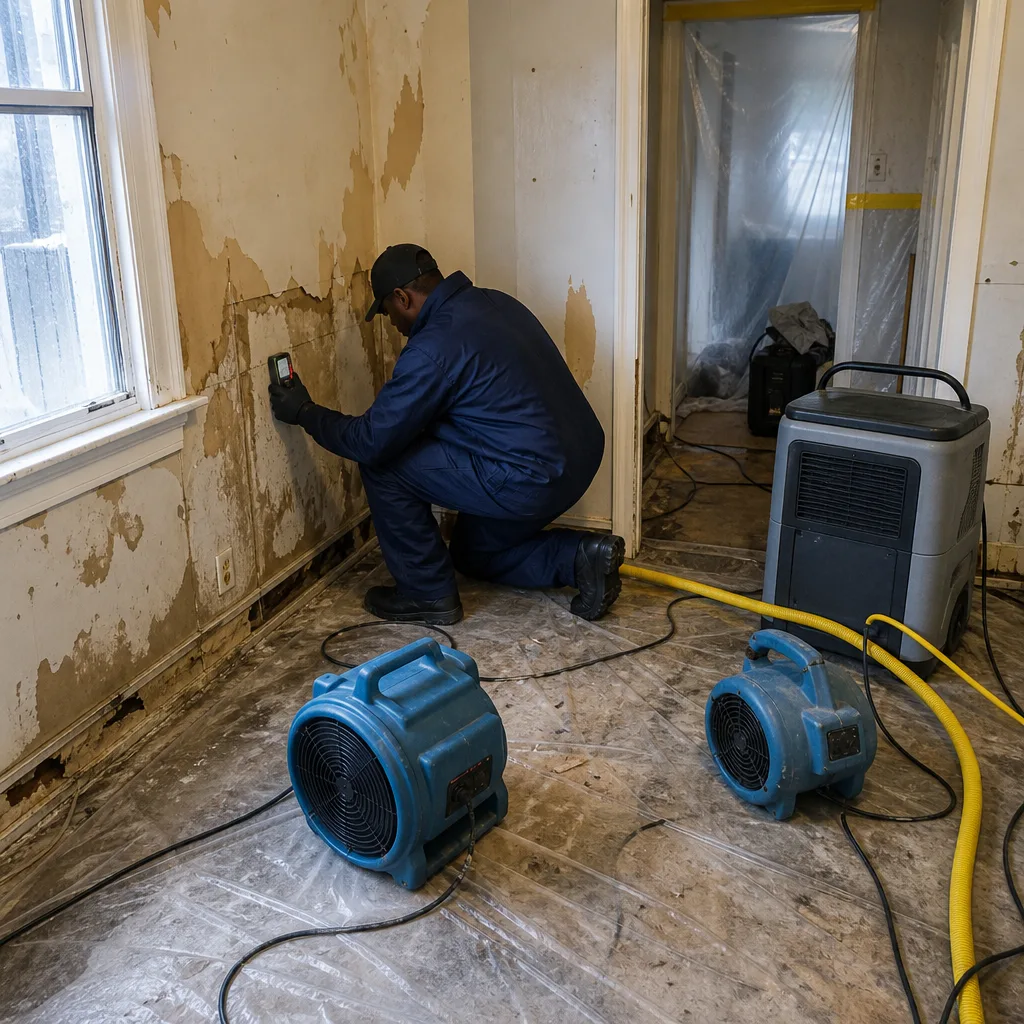 Before
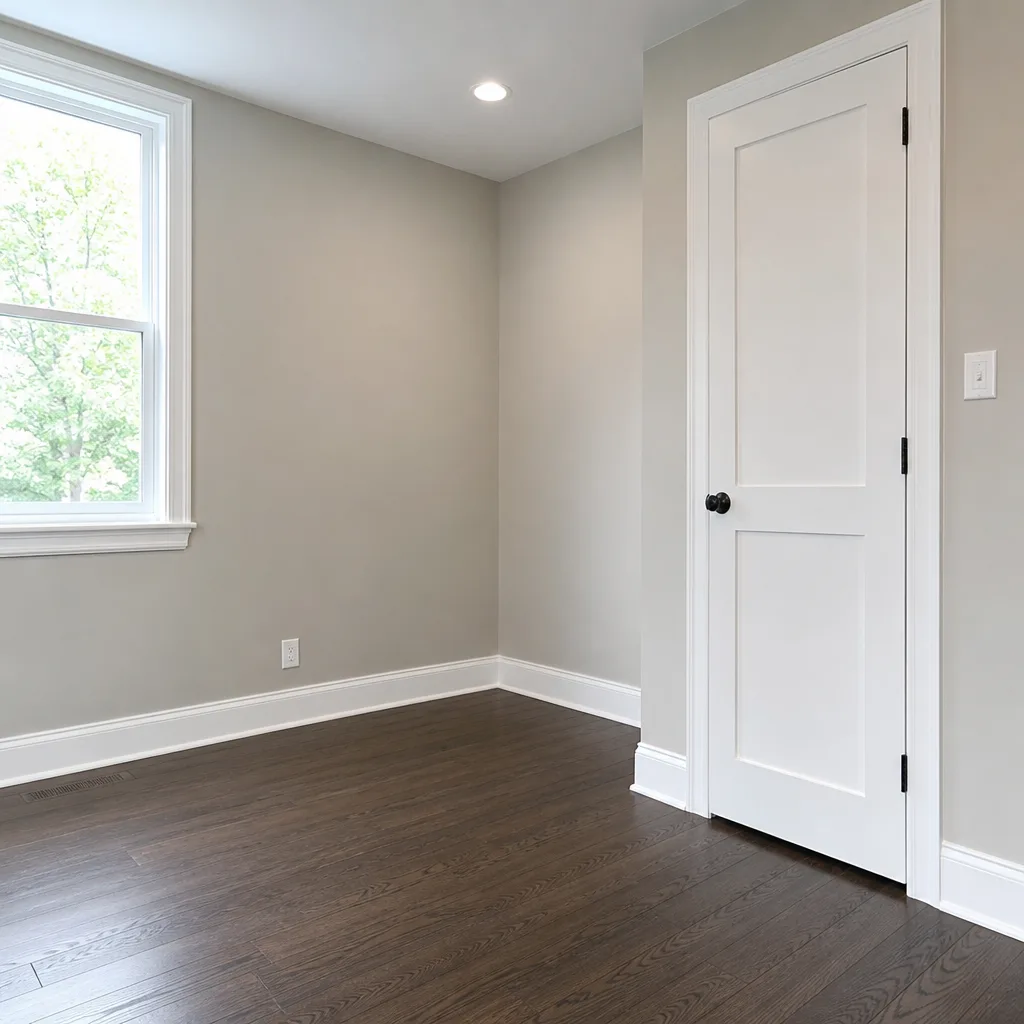 After
After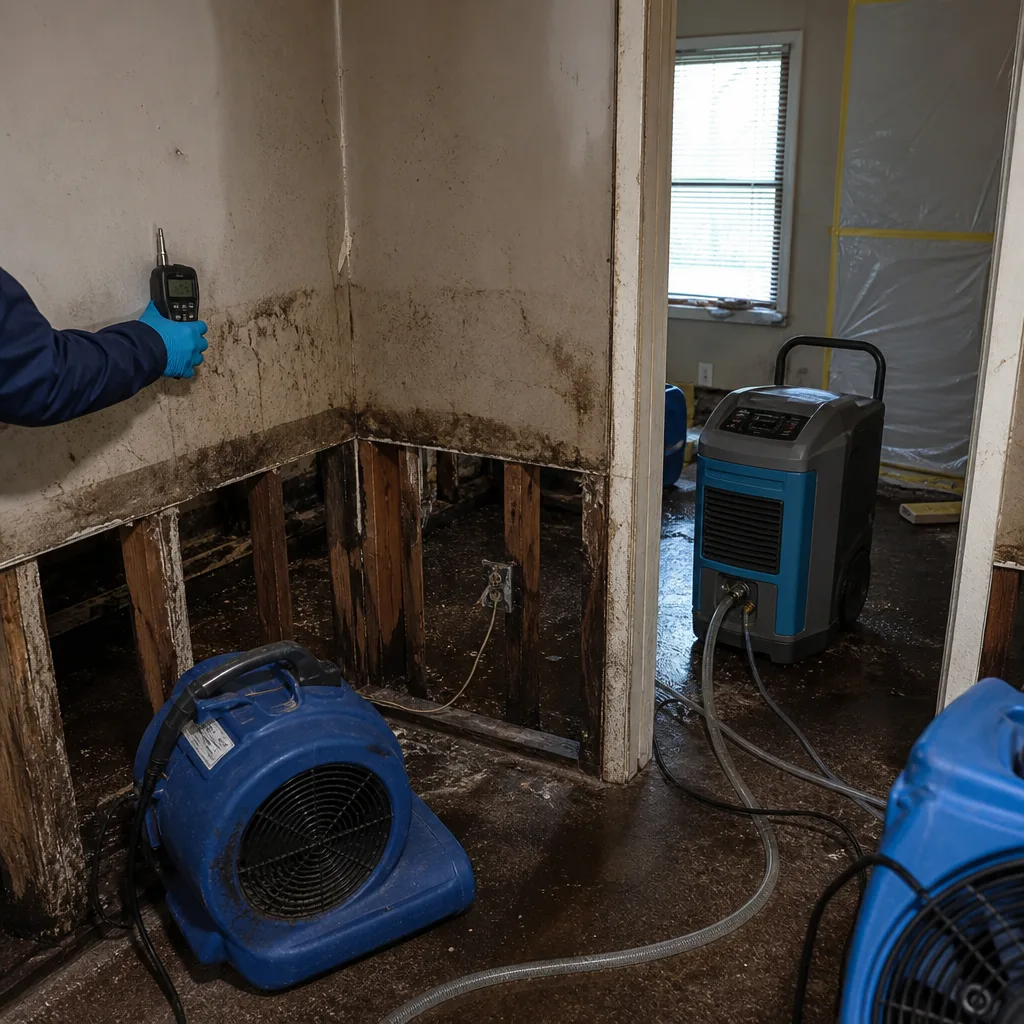 Before
 After
After24/7 Emergency Fire & Smoke Damage Restoration in Flatlands
Fire and smoke damage in Flatlands moves fast, and so do we. Our crews answer live around the clock and can reach most Flatlands properties within 45 minutes of your call. The first hour after a fire is when soot bonds to surfaces, smoke odor locks into drywall and fabric, and acidic residue begins etching metal finishes and glass. Call (518) 750-3137 now for a free visual inspection. We walk the damage with you, write a clear scope, and start mitigation the same visit when it’s safe to do so.
You won’t get a recording. You’ll get a dispatcher who knows Flatlands, asks the right questions, and sends a uniformed, background-checked crew that’s certified to IICRC standards. We’ve seen fires in 1950s semi-detached brick homes, finished basements with years of hidden moisture, and structures where storm surge and smoke have compounded each other. Every job starts with a straight answer and ends with the 90-Day Done Right Promise in writing.
Understanding Fire & Smoke Damage Restoration Severity in Flatlands Properties
Flatlands is overwhelmingly built with one- and two-family brick homes from the 1940s through the 1960s. Cape Cods and colonials sit on small lots, often with finished basements retrofitted decades after original construction. That matters after a fire. Smoke doesn’t stay where the flames were. It migrates through wall cavities, chases, and floor assemblies, condensing as it cools into a thin, oily residue called soot. We classify what we find: light surface dust, medium residue on walls and contents, or heavy, greasy soot that saturates porous materials. Each level drives a different restoration response.
But Flatlands adds a layer most Brooklyn neighborhoods don’t share. The neighborhood sits at one of the borough’s lowest elevations, abutting Jamaica Bay’s flood plain. Large sections are mapped in FEMA flood zone AE. Decades of storm-surge moisture, especially from Hurricane Sandy in 2012, left many wall cavities and subfloors permanently damp, salt-laced, and pre-conditioned for odor retention. Soot particles bond with the salt residue left by bay water. Smoke odor hides behind paneling that’s already compromised. A fire restoration crew that doesn’t account for this will clean surfaces and leave the smell behind. We don’t.
Why Flatlands Property Owners Choose Floodline Restoration Co.
- 45-minute response commitment. We dispatch a crew to Flatlands addresses fast, with live call answer 24/7. Fires don’t wait, and neither do we.
- A real person answers, every time. No automated phone tree at 2 a.m. A dispatcher picks up, asks what burned, and sends the right equipment.
- IICRC-certified crews. Our technicians hold FSRT and OCT certifications. They know fire, smoke, and odor science, not just cleaning.
- Free visual inspection. We walk the property with you, identify what’s salvageable and what isn’t, and hand you a written scope before work begins.
- Direct insurance billing. We coordinate with your adjuster, provide photo documentation and line-item estimates, and bill the carrier directly. You never play messenger.
- One team from first response to final rebuild. We extract, stabilize, dry, clean, deodorize, and rebuild. No mid-job handoff to an unknown crew.
Floodline Restoration Co. was founded in 2010 by Curt Bowman, built around a dispatch board instead of a sales desk. We’ve grown by answering the phone and standing behind the work. Every job carries the 90-Day Done Right Promise, what we call the Keystone Standard. If it’s not done right, we make it right. No paperwork battles. No arguing. It’s in writing.
Our Fire & Smoke Damage Restoration Process
Inspection & Assessment
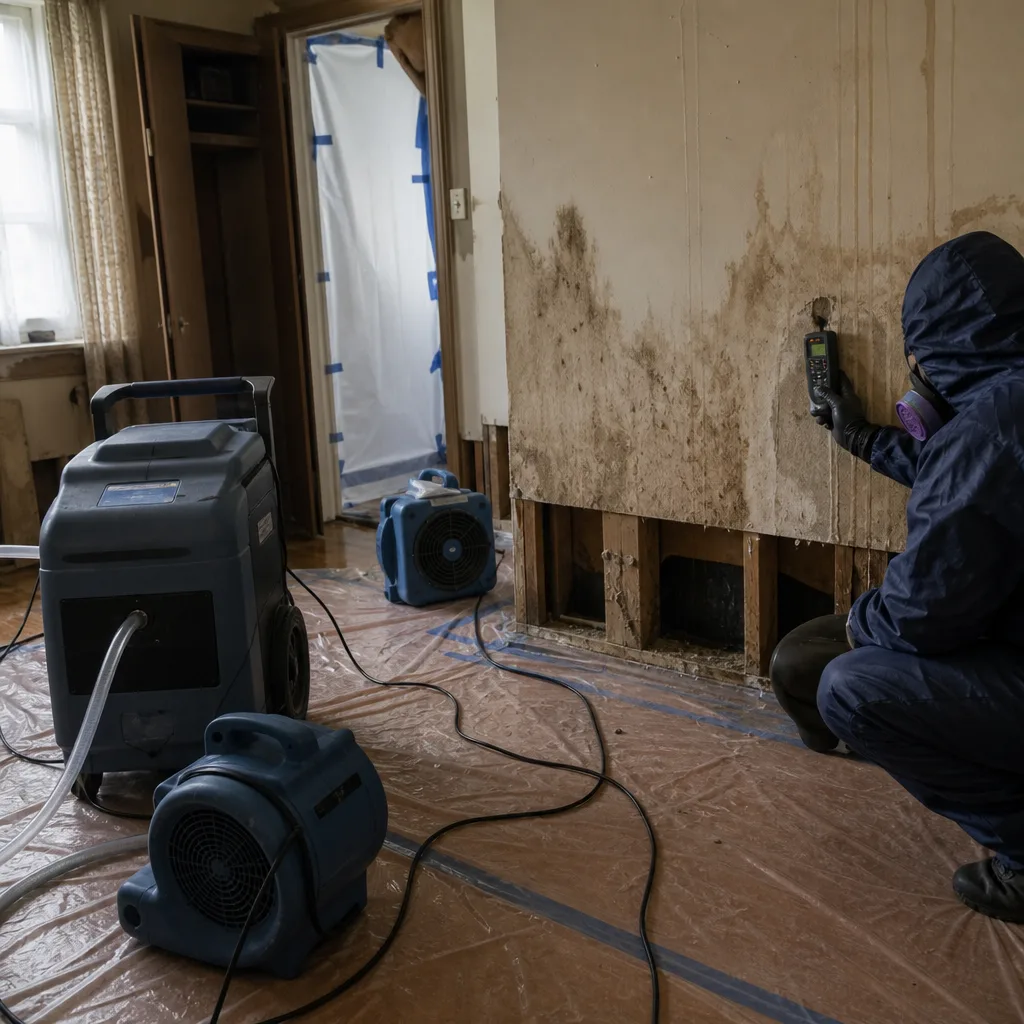
We arrive, walk the property, and document everything. Thermal imaging identifies heat-damaged cavities. Moisture meters map what’s wet. Soot testing tells us whether we’re dealing with dry protein residue, oil-based soot, or acidic synthetic residue from burned plastics and electronics. You get a written scope, not a vague estimate.
Extraction & Stabilization
If firefighters used water, we extract it immediately. Structural stabilization includes emergency board-up, tarping damaged roofs, and shoring any compromised framing. In a finished Flatlands basement, we check for standing water in every cavity the fire exposed.
Drying & Dehumidification
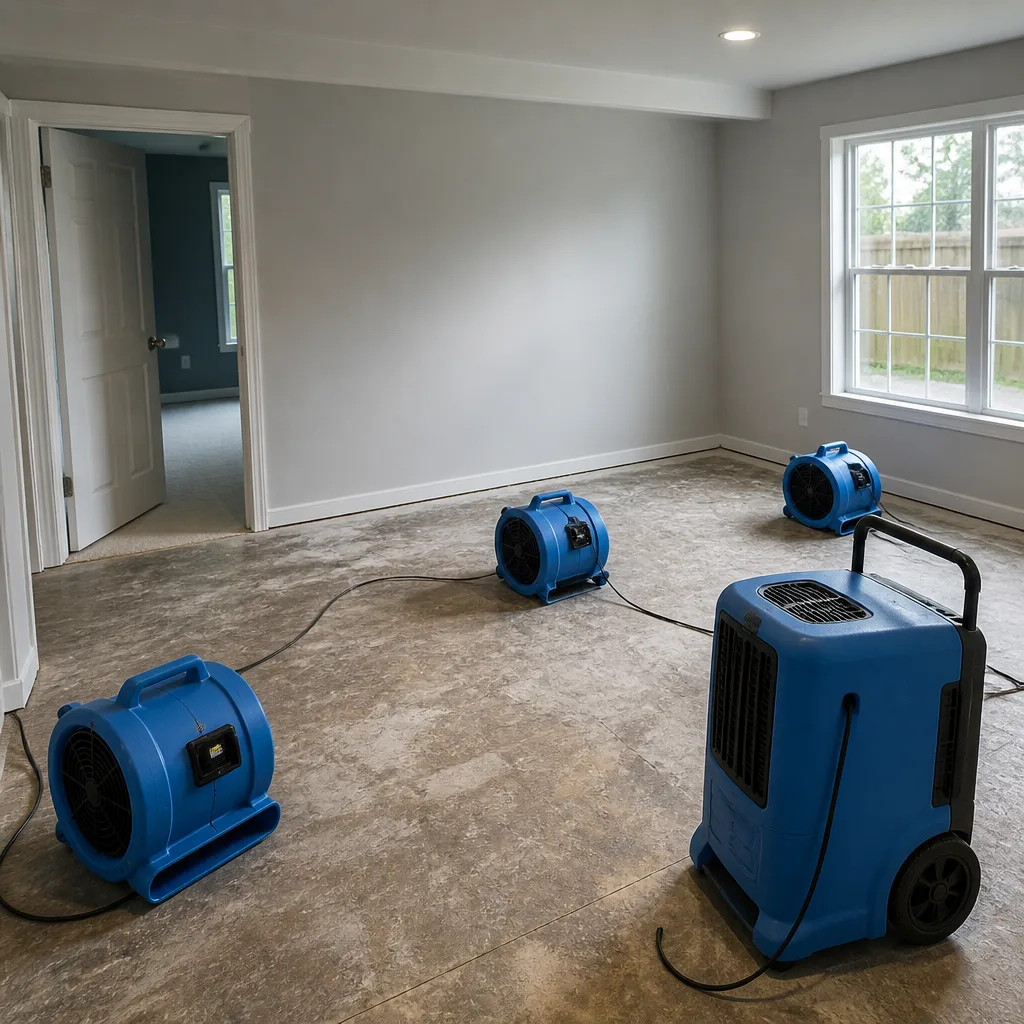
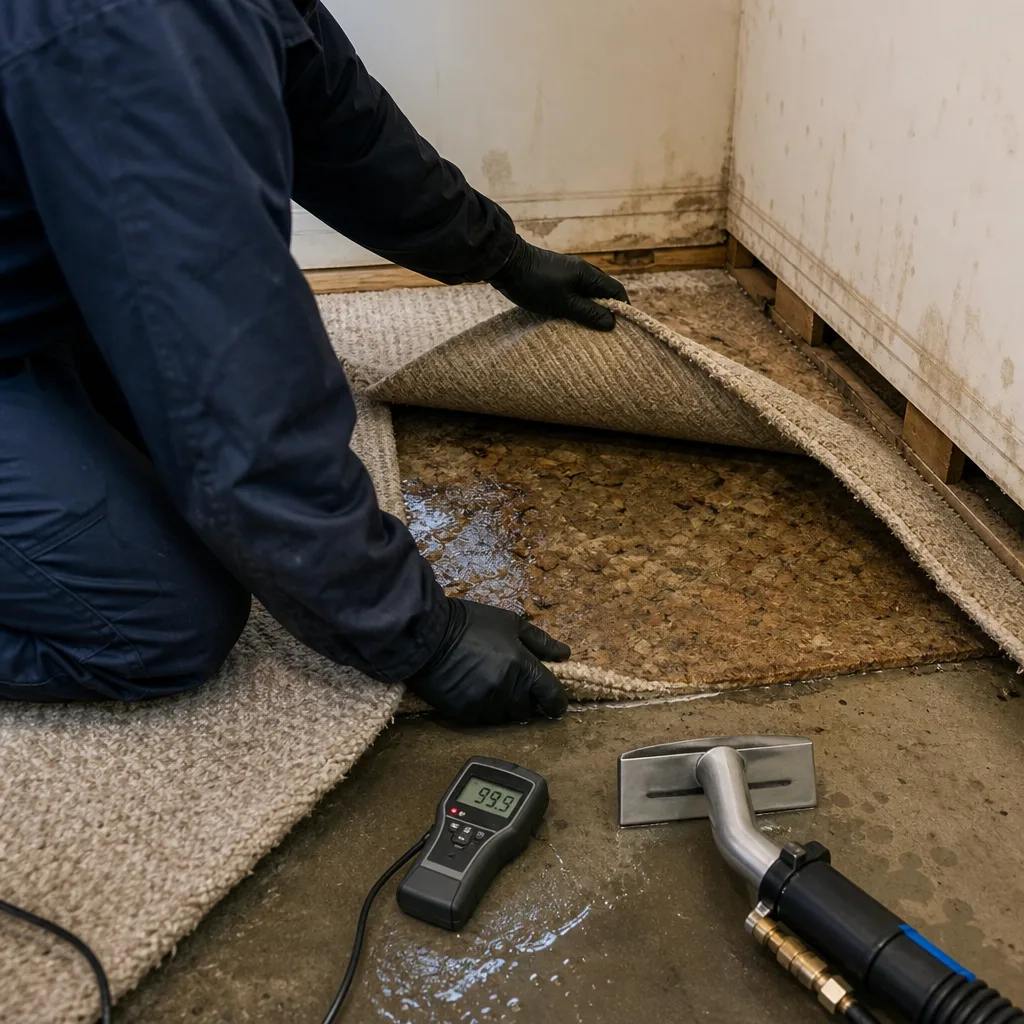
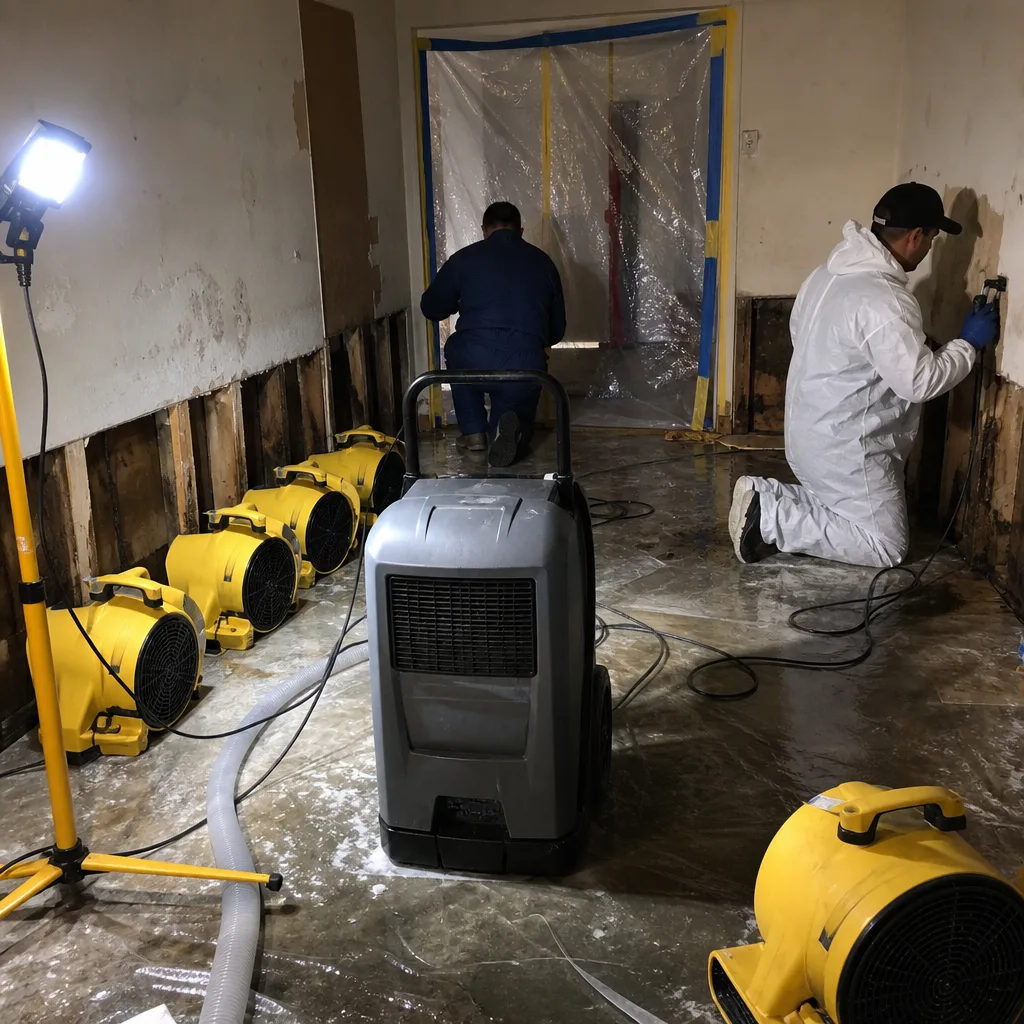
Dri-Eaz dehumidifiers and XPOWER air movers run continuously, with daily moisture readings logged until the dry standard is met. This matters double here: Flatlands homes often carry residual moisture from Jamaica Bay flooding, which extends drying time and demands more aggressive equipment.
Cleaning & Sanitization
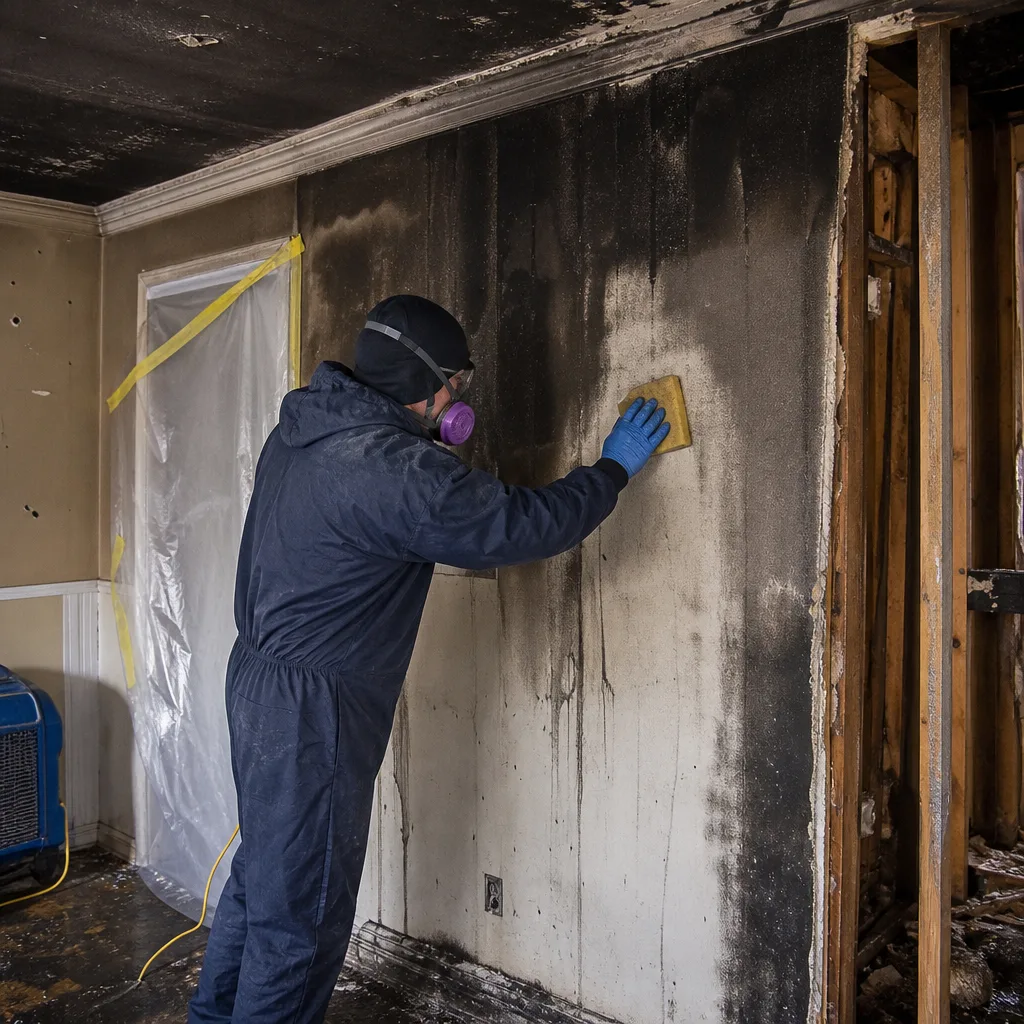
HEPA air scrubbers run in containment while we remove soot from surfaces, fixtures, and framing. Antimicrobial treatment follows on water-exposed materials. Soot is acidic; leaving it on metal, glass, or wiring accelerates corrosion. We treat it as a chemical contaminant, not cosmetic dirt.
Odor Removal & Deodorization
Odor remediation in Flatlands requires more than thermal fogging. Salt residue from prior storm surge bonds with smoke particles at a molecular level. We combine hydroxyl generation, ozone treatment where appropriate, and targeted removal of saturated drywall and insulation. If the odor source is hidden behind retrofitted paneling, we open the cavity and treat it. Surface cleaning doesn’t cure embedded odor.
Repairs & Restoration
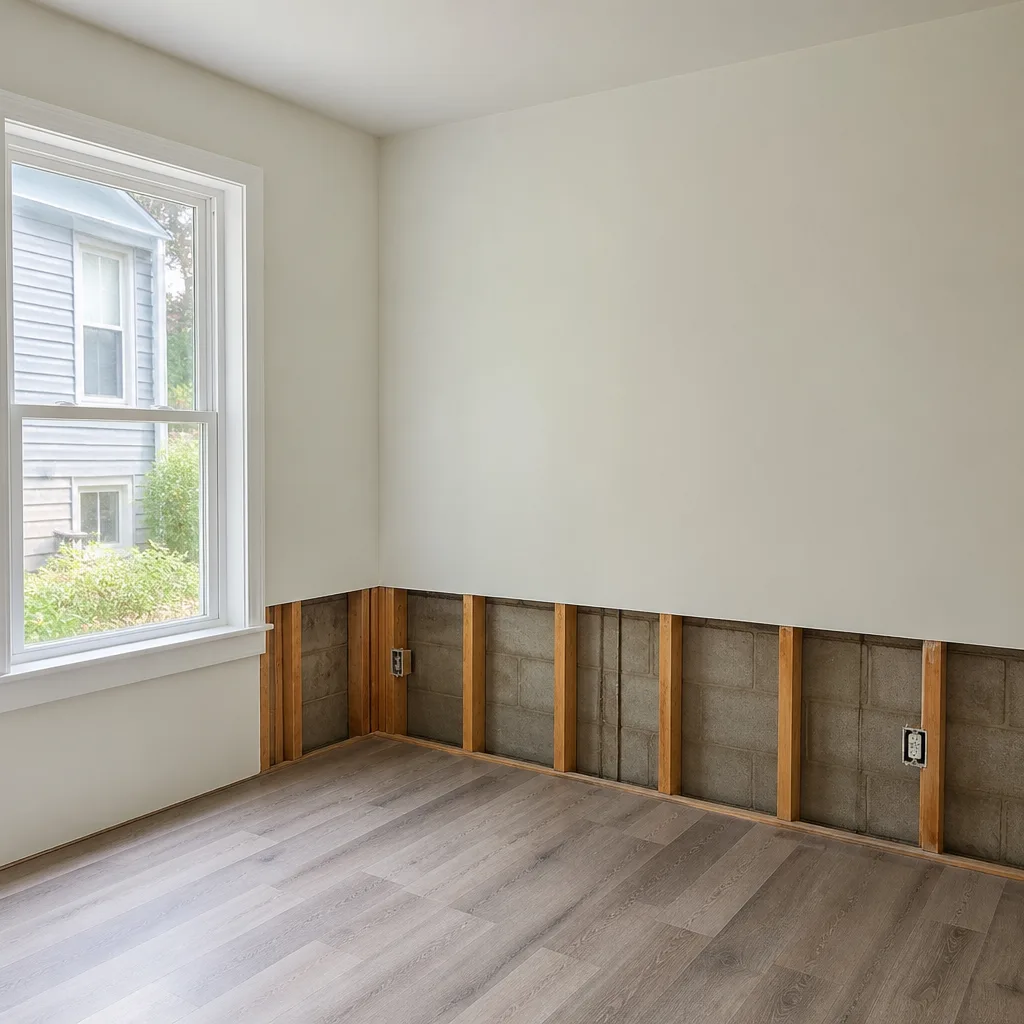
Once the property is dry, clean, and structurally sound, we rebuild: framing, drywall, flooring, paint, trim. Because our crews handle the entire cycle, the same people who read the moisture map on day one handle the final coat of paint. No gaps. No finger-pointing.
Need Emergency Fire & Smoke Damage Restoration in Flatlands Now?
Crews minutes away, answering live 24 hours a day. The sooner we start, the less it costs.
Working With Your Insurance Company
Fire claims are complex, and Flatlands homeowners often carry the added weight of prior flood claims from Sandy and subsequent storms. We handle it so you don’t have to. From the first hour, we document everything: photos of every affected room, moisture readings, soot classification, and a detailed line-item scope in the exact format insurers expect. We coordinate directly with your adjuster, schedule joint inspections, and bill the carrier directly. If your policy covers fire restoration, you shouldn’t be chasing paperwork. That’s our job. A square deal: no surprises on the bill.
What We Provide Your Insurer
- Thorough documentation of the loss
- Photos of all damage, room by room
- Moisture readings and drying logs
- A detailed, line-item scope of work
- Direct coordination with your carrier
Built for Flatlands’s Loss Calendar
Flatlands doesn’t have a quiet season. In deep winter, frozen supply lines burst in unheated finished basements, flooding the same spaces where furnaces and boilers sit. When a water event meets an electrical system, the result is frequently a basement fire. Nor’easters and Atlantic storm systems push storm surge up against Jamaica Bay, overwhelming street drainage on the neighborhood’s flat, impermeable grid. Summertime brings thunderstorms that dump inches of rain in an hour, flooding basements that were never waterproofed after they were finished in the 1980s and 90s. The common thread? Water and fire rarely arrive separately here.
That’s why our Fire & Smoke Damage Restoration crews in Flatlands carry both moisture extraction equipment and soot remediation tools on every call. We don’t know yet what we’ll find, and we plan for both. The neighborhood’s history of repeated inundation means many homes have already absorbed water two or three times since Sandy. When a fire hits those same structures, the restoration calculus changes. We dry what’s wet, clean what’s smoked, and rebuild what’s burned, all under one roof.
Fire & Smoke Damage Restoration Across Flatlands’s Neighborhoods
Response routes through Flatlands follow the avenues: Flatlands Avenue, Avenue N, Avenue L, and Kings Highway. Homes along Ralph Avenue and around the old Flatbush border tend to be 1950s brick colonials with finished basements. Fires there often involve electrical panels or older heating systems, and smoke migrates up through shared party walls in the semi-detached stock. Near Bergen Beach and Mill Basin, where the terrain flattens toward Jamaica Bay, structures carry the heaviest storm-surge legacy. Soot bonds with salt-residual concrete there in ways we don’t see inland. Crews dispatched east of Flatbush Avenue and south toward the Belt Parkway anticipate higher moisture readings on every job, fire or not.
The original Dutch farming plain gave Flatlands its name and its geography: wide, level, and low. Streets drain slowly. Water tables run high. Homes built in the 1940s and 1950s sit on shallow foundations with finished basements that were never designed for modern waterproofing. When a basement fire is extinguished with hundreds of gallons of water, that water has nowhere to go. We deploy extra dehumidification capacity on Flatlands jobs because we know the saturation window here extends longer than it does uptown. The moisture log tells the story: we often need five to seven days of continuous drying in Flatlands where a similarly sized job in drier Brooklyn would close out in three.
Our crews know the specific corners where flooding lingers after a nor’easter, the blocks where Sandy’s storm surge never fully dried, and the intersection patterns that route emergencies fastest. That local routing knowledge saves time when time is what determines whether your contents are salvageable. For generations of homeowners in Flatlands, the name Floodline means one thing: a crew that answers, shows up, and finishes.
Specialized Fire & Smoke Damage Restoration Services We Offer in Flatlands
Fire Damage Cleanup
Fire cleanup in Flatlands means removing charred materials, cleaning soot from every exposed surface, and neutralizing the acidic residue that attacks metal, glass, and wiring. In older brick homes with lath-and-plaster walls or 1960s drywall, heat damage often hides behind intact surfaces. We open walls where the thermal camera tells us something’s wrong, not where convenient.
Smoke & Soot Removal
Smoke and soot removal here is different because Flatlands homes carry salt residue from decades of bay flooding. Standard dry-chem sponges lift less. We use HEPA vacuuming, wet cleaning with appropriate detergents, and mechanical agitation on masonry surfaces where soot has bonded with salt deposits on basement concrete and brick. It’s slower work, but it’s the only method that actually removes what’s there.
Odor Removal & Deodorization
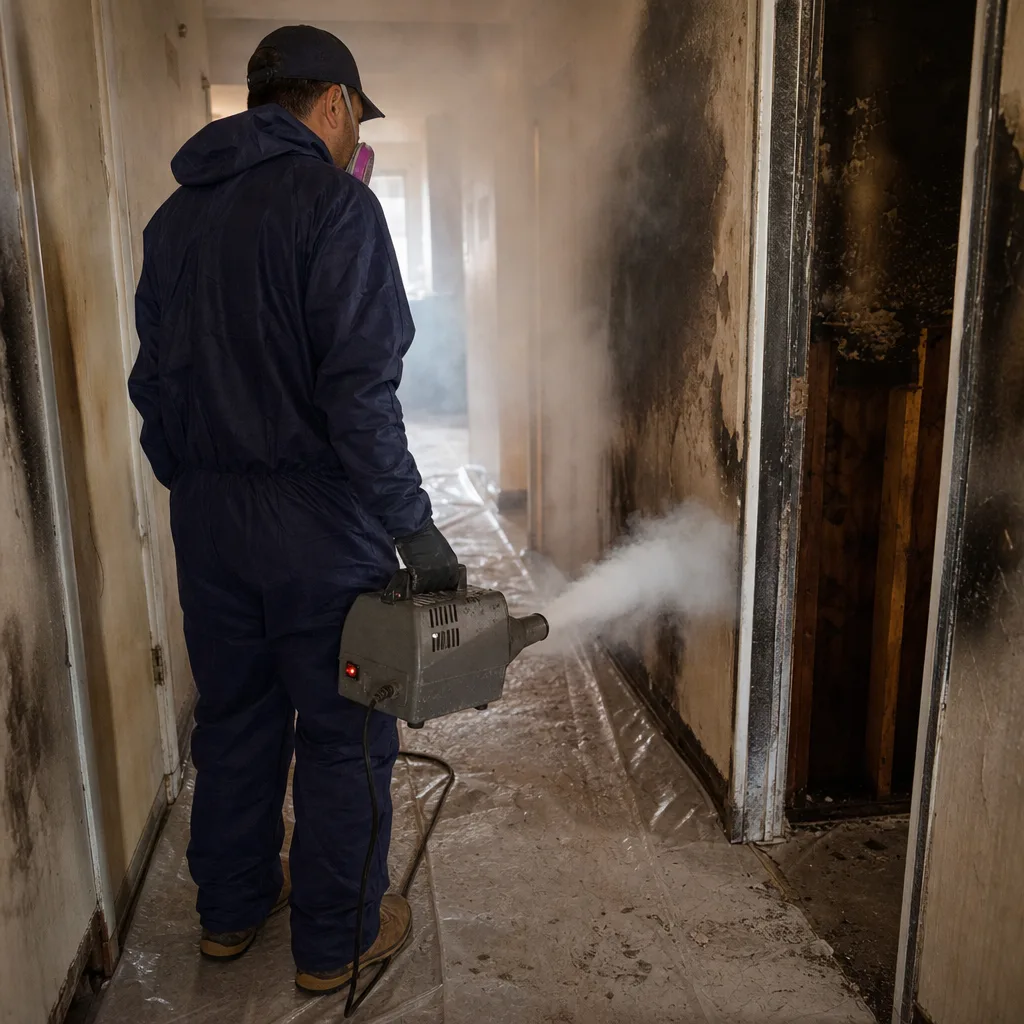
Smoke odor in a finished Flatlands basement hides behind retrofitted paneling, under stair stringers, and inside joist bays that were never sealed. Thermal fogging helps with surface-level odor, but not with what’s trapped in a damp wall cavity. We combine hydroxyl generators, ozone treatment in unoccupied spaces, and selective removal of saturated drywall and insulation. Then we seal what remains. The goal is a home that smells like a home, not like a fire that happened to be cleaned.
Contents Cleaning & Pack-Out
Furniture, clothing, books, electronics: smoke gets into everything. We offer on-site contents cleaning and full pack-out when the damage requires it. Items are inventoried, photographed, cleaned, deodorized, and stored in a climate-controlled facility until your home is ready. The inventory goes to your insurer with the rest of the claim file.
Emergency Board-Up & Tarping
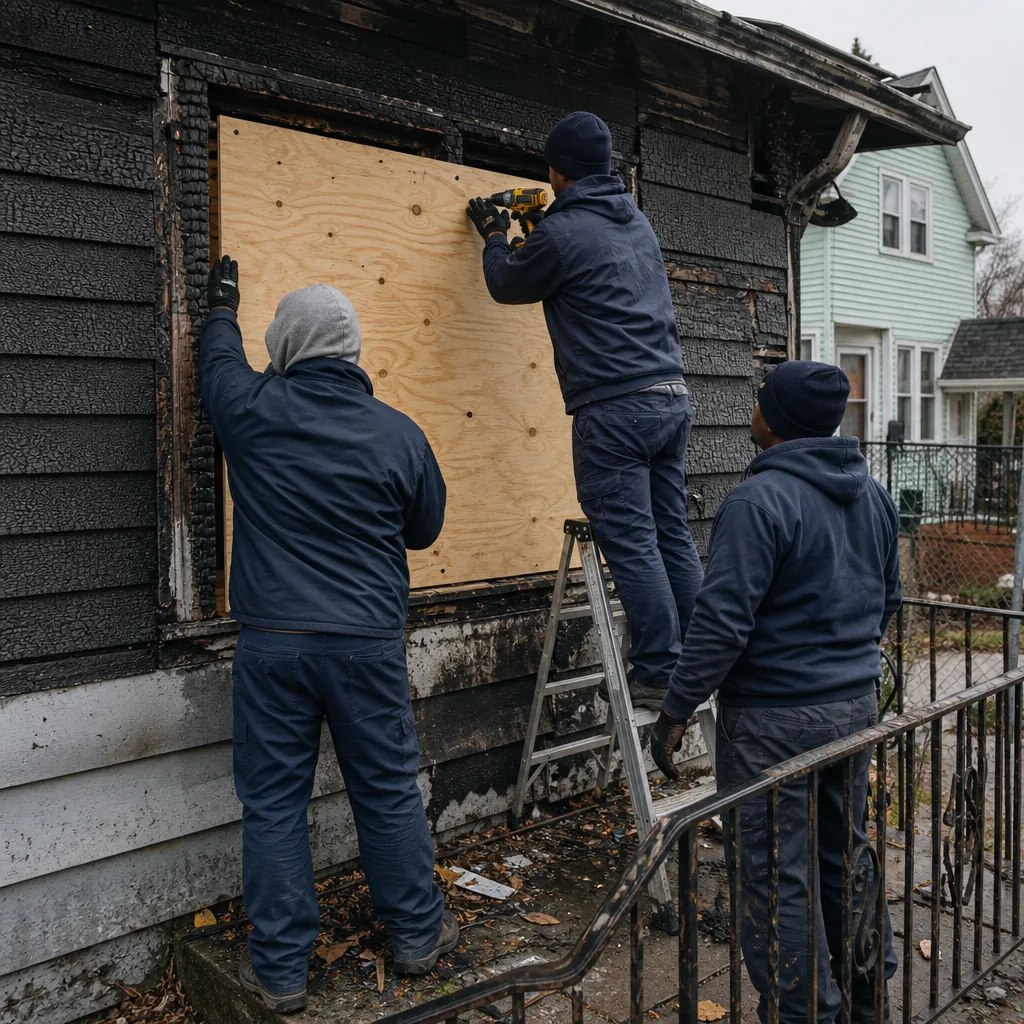
After a fire, an open window or burned-out door is an invitation. We board up within hours using plywood secured with proper fasteners, not a few nails. Tarping covers compromised roofing until permanent repairs can be scoped. In Flatlands, where another storm is always on the calendar, a temporary patch has to survive wind and rain until the adjuster completes their inspection.
Structural Fire Repair
This is where our full-cycle model earns its keep. After the water is extracted and the soot is cleaned, structural repair begins: floor joists, sill plates, load-bearing walls, roof framing. In Flatlands, we often find that water-exposed framing has been pre-conditioned by prior storm surge, so repairs uncover more than the fire damaged. We don’t ignore what’s behind the fire. We rebuild it right, and we stand behind it with the 90-Day Done Right Promise.
What happens when you call
- 1
A real person answersNo phone trees - you reach a local pro.
- 2
You get an upfront price rangeHonest numbers before anyone is dispatched.
- 3
A background-checked tech heads outLicensed & insured, dispatched right away.
- 4
You approve before work beginsNothing starts until you say go.
Fire & Smoke Damage Restoration Costs in Flatlands, NY
Most Flatlands fire and smoke restoration jobs run between $3,200 and $18,000, depending on what burned and how far the smoke traveled. A small kitchen fire with moderate soot throughout a first floor typically falls in the $3,200 to $6,500 range. A basement fire with water extraction, structural drying, and full smoke odor remediation runs $7,000 to $14,000. Full structural rebuilds after a significant fire can reach $40,000 or more on larger semi-detached homes.
What moves the price: the square footage affected, whether the fire reached structural framing, the amount of water used by firefighters, and whether prior moisture damage has compromised materials that now need replacement. Contents cleaning and pack-out add cost based on volume. The fastest way to a firm number is a free on-site inspection. We write the scope, you review it, and your insurer gets the same line item list. Estimates are free. No surprises.
We Also Serve Cities Near Flatlands
Our crews respond across the wider Brooklyn basin, including East Flatbush, Sunset Park, Bedford-Stuyvesant, and Bensonhurst. Dispatch is coordinated from our New York City office, and local crews serve Flatlands directly. If you’re near Flatlands and need fire or smoke restoration, call us. We’ll route the nearest certified crew your way.
Flatlands Fire & Smoke Damage Restoration Questions, Answered
How does Flatlands’ flood history affect smoke odor removal after a fire?
Flatlands sits in FEMA flood zone AE, and many homes have absorbed storm surge from Jamaica Bay, leaving salt residue and damp materials that bond with smoke particles and hold odor longer. We treat this by removing saturated materials, cleaning masonry with agitation rather than surface wiping, and running extended deodorization cycles. A fire restoration crew that doesn’t account for Flatlands’ moisture history will leave the smell behind. Call (518) 750-3137 if you’re dealing with this right now.
Do I need to worry about mold after a fire in a Flatlands basement that flooded during Sandy?
Yes. If your basement flooded during Sandy and was repaired in place rather than properly dried, moisture may have been trapped in framing and insulation for years. A fire adds heat and often introduces more water from firefighting. The combination accelerates mold growth in wall cavities and below-grade spaces. We check for mold on every fire restoration job in Flatlands, and if we find it, we remediate it under proper containment as part of the same scope. Call (518) 750-3137 for a free inspection.
Can you safely board up a Flatlands home after a fire if the structure is also water-damaged?
Yes. Our board-up crews assess structural stability before touching anything. We use proper fasteners, not just nails, and we tarp compromised roofing to hold against wind and rain. In Flatlands, where another nor’easter is always possible, temporary protection has to hold until permanent repairs are scoped. We’ll board up the same day you call, then walk the property with you to plan the next step.
Will fire restoration remove the smell of smoke from my 1950s brick semi-detached in Flatlands?
Yes, if the odor source is fully treated and the materials holding the odor are either cleaned or removed. In 1950s semi-detached homes with finished basements, smoke migrates through shared party walls and hides behind retrofitted paneling. Surface treatments alone won’t do it. We open the cavities, remove saturated insulation and drywall, clean exposed framing, and run extended deodorization with hydroxyl generators and HEPA air scrubbers. The result is a home that doesn’t smell like smoke.
I had fire damage and my basement also got wet. Which restoration comes first?
Both happen at once. We extract standing water immediately while smoke and soot remediation continues under containment. The reason is simple: water left standing spreads into dry areas, and soot left on wet surfaces bonds harder and becomes more difficult to remove. In Flatlands, where basements often hold residual moisture from prior flooding, we’re aggressive about drying from hour one. The same crew handles both problems during the same visit.
How fast can someone actually get to my Flatlands home?
We commit to a 45-minute response for Flatlands addresses, with crews dispatched from nearby routes. Our dispatchers answer live 24 hours a day, including weekends and holidays. Fires escalate quickly: soot bonds in hours, and acidic residue begins etching metals and glass within days. The faster we start, the more we save and the less it costs. Call (518) 750-3137 and a crew will be on the way.
Do I really need full restoration, or just a cleaning?
That depends on what burned and how far smoke traveled. A small stovetop fire with light soot may only require surface cleaning and air scrubbing. A fire that reached structural framing or produced heavy, oily soot throughout the home requires full restoration, including removal of porous materials and sealant application. We’ll tell you honestly which category you’re in and write a scope that matches. If only a light cleaning is needed, we’ll say so. We don’t oversell work.
What should I do in the first 30 minutes after a fire?
First, make sure everyone is safe and the fire department has cleared the structure. Then call us at (518) 750-3137. Don’t touch soot-covered surfaces with bare hands. Don’t turn on ceiling fans or the HVAC system, because that spreads soot. Don’t try to clean walls yourself, as improper wiping can grind soot deeper into paint and drywall. We’ll arrive with the right equipment and start mitigation the same visit.
Serving Flatlands, NY - Our Local Coverage Area
We’re based in the Flatlands area and know this community well. Use the map below to see our service coverage - if you’re nearby, we can almost certainly help.
One More Thing About Fires in Flatlands
On East 46th Street, our crew documented a basement fire in a 1950s brick semi-detached where previous Sandy flooding had left fiberglass insulation and unsealed framing already saturated. After water extraction and structural drying, we performed antimicrobial treatment, then ran XPOWER air movers and Dri-Eaz dehumidifiers for five days while smoke and soot remediation continued under full containment. The masonry walls had never dried to pre-loss condition, so we had to remove saturated drywall and insulation before deodorization could fully eliminate the smoke odor.
That job took longer than a typical fire restoration in a dry structure. It cost more. But the alternative was worse: a home that looked clean and still smelled like smoke, with mold blooming behind the walls a year later. This is the reality of fire and smoke damage restoration in Flatlands. Decades of storm-surge moisture from Jamaica Bay mean the homes here don’t behave like homes in drier Brooklyn. Our crews know that. We plan for it on every job. And we stand behind the work with the 90-Day Done Right Promise, in writing, no arguing.
If your Flatlands home has fire or smoke damage, call (518) 750-3137 now. A live person answers. A certified crew responds. And the job gets done right, from first extraction to final rebuild.
Written by Curt Bowman, Owner at Floodline Restoration Co., serving Flatlands with full-cycle fire, smoke, water, and mold restoration since 2010.