
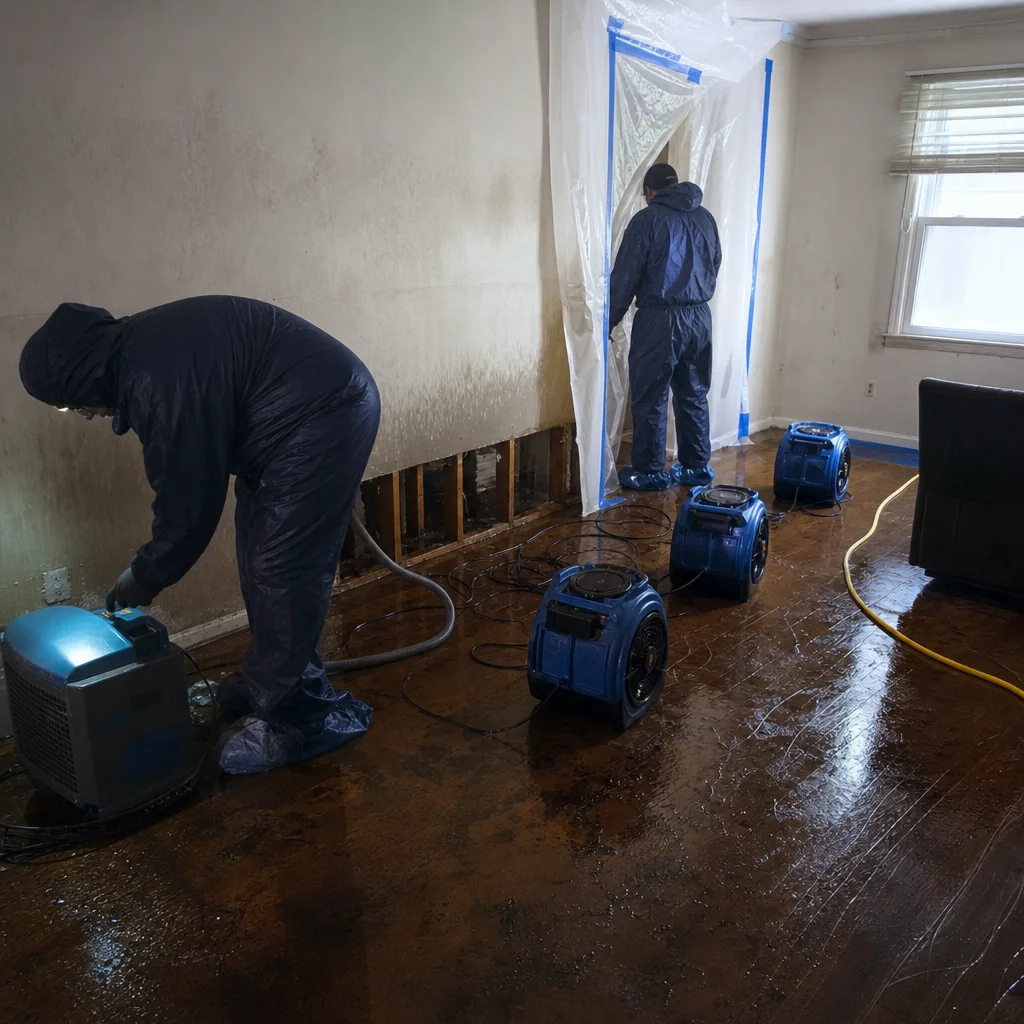
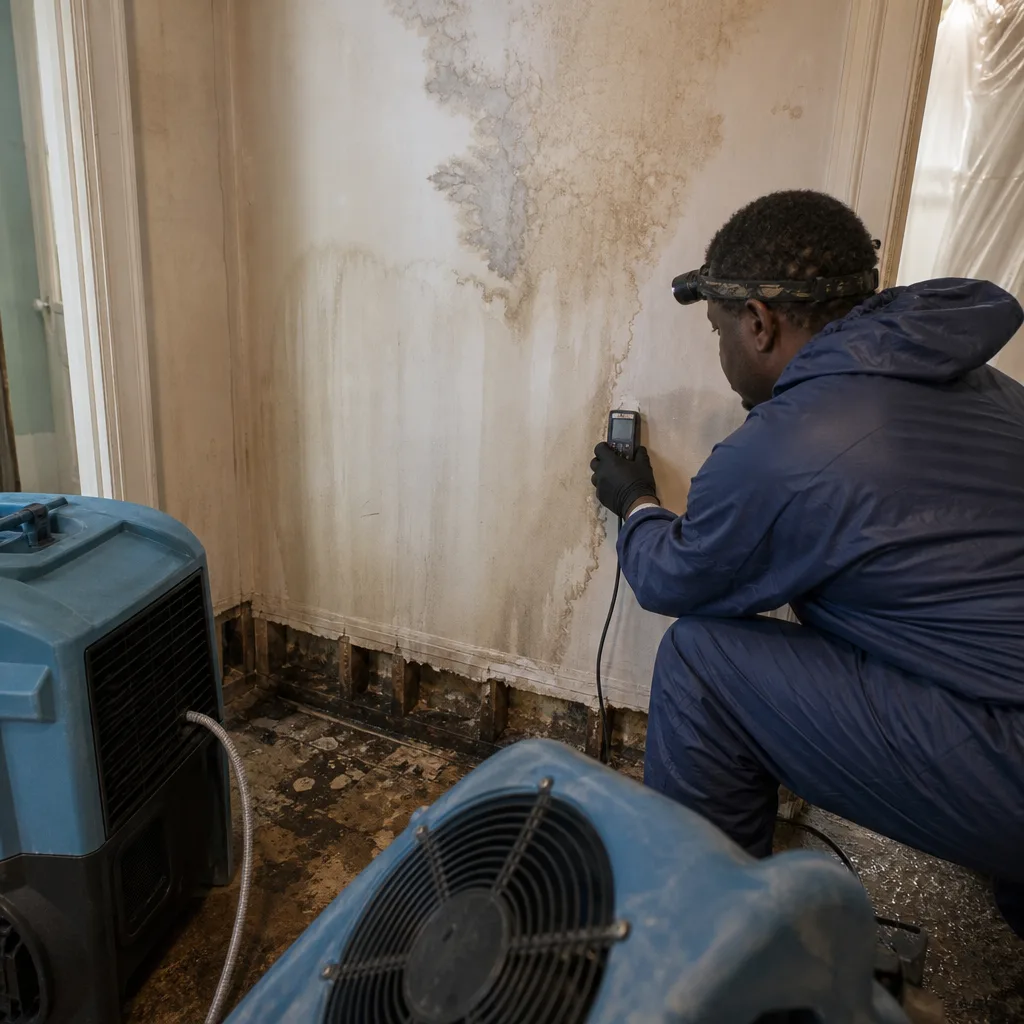
Free visual inspection and a written scope of work before any mitigation begins - photos, moisture readings, and drying logs go in your claim file
The scope we write is the scope we bill. Anything new gets shown to you, in writing, before we touch it.
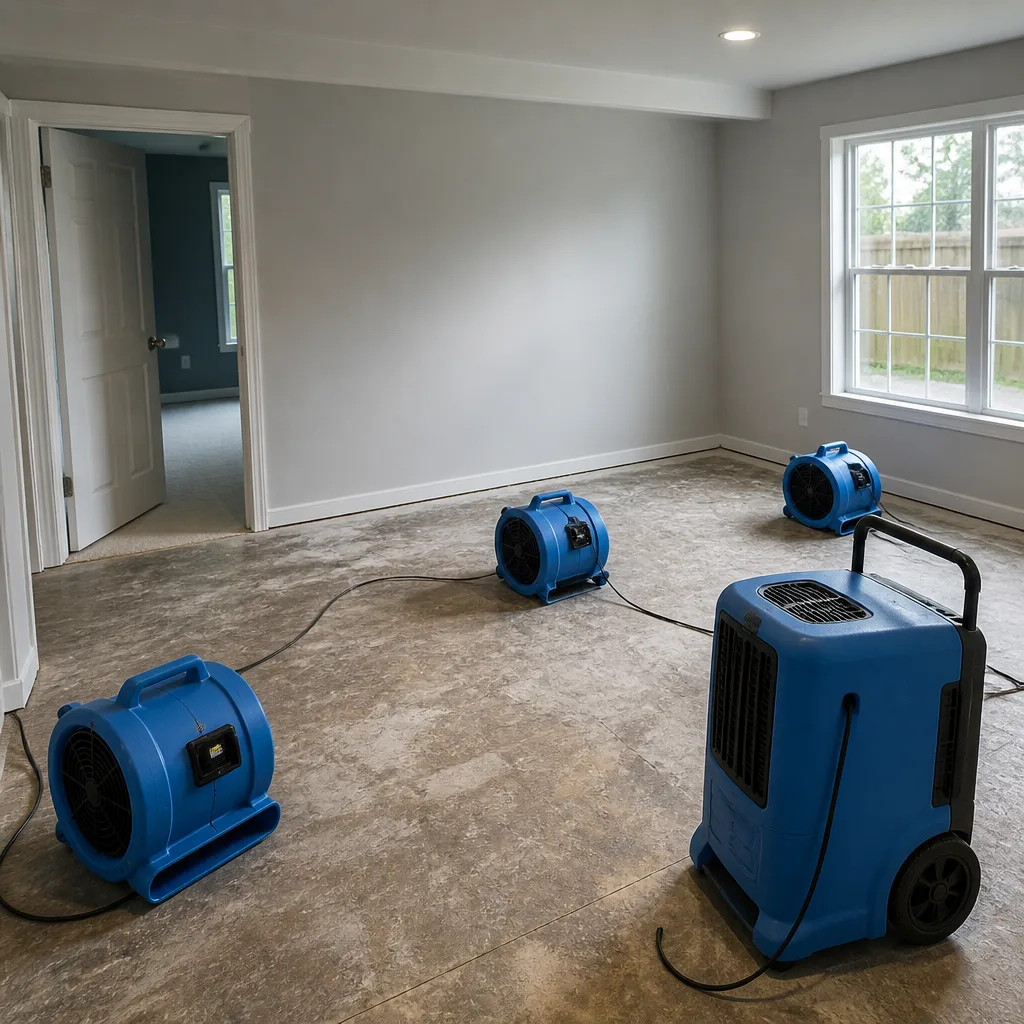
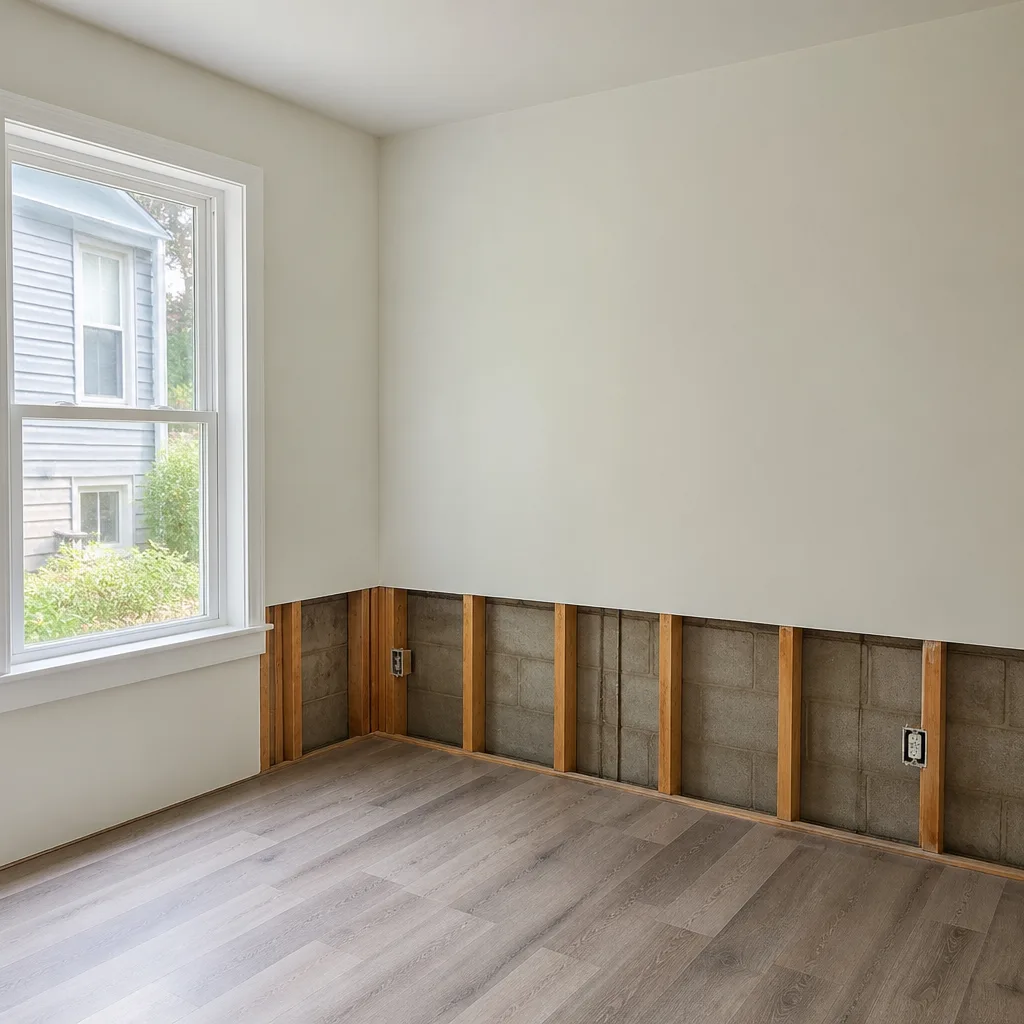
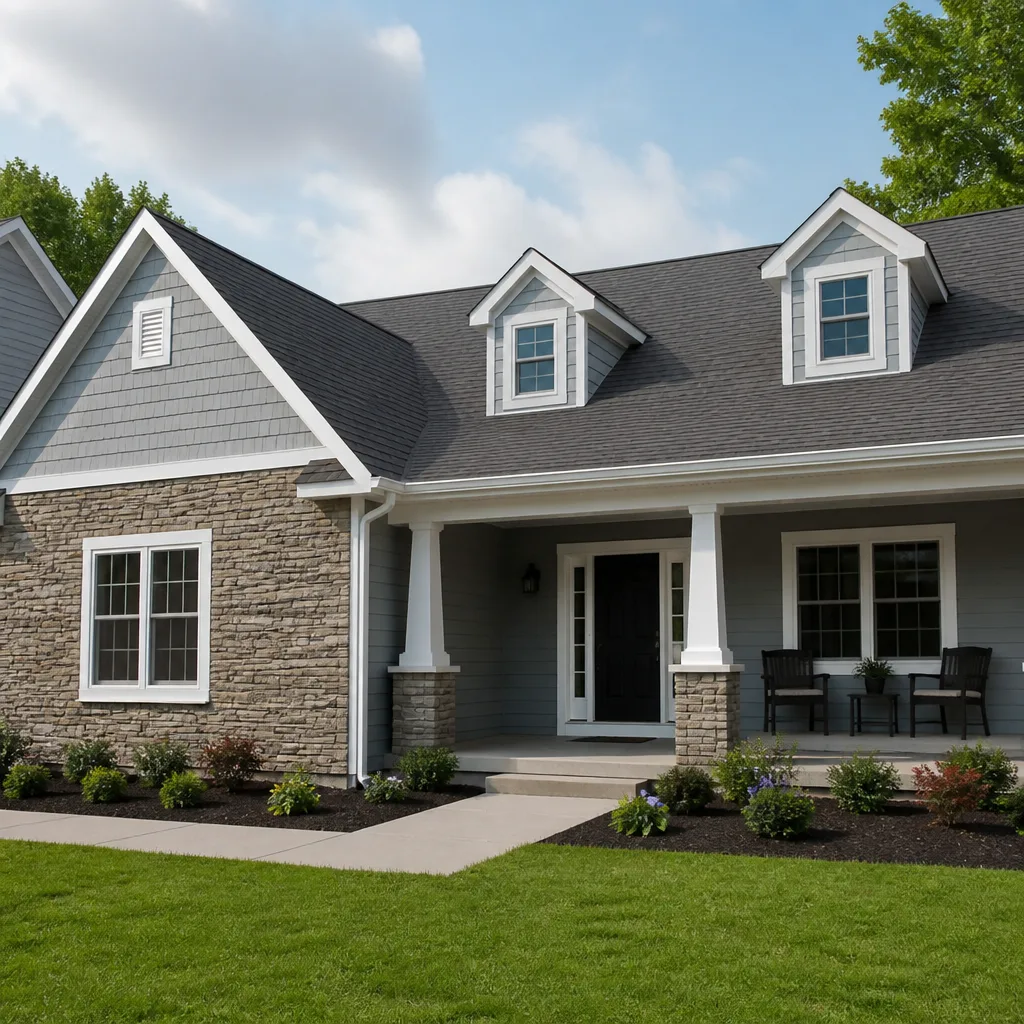
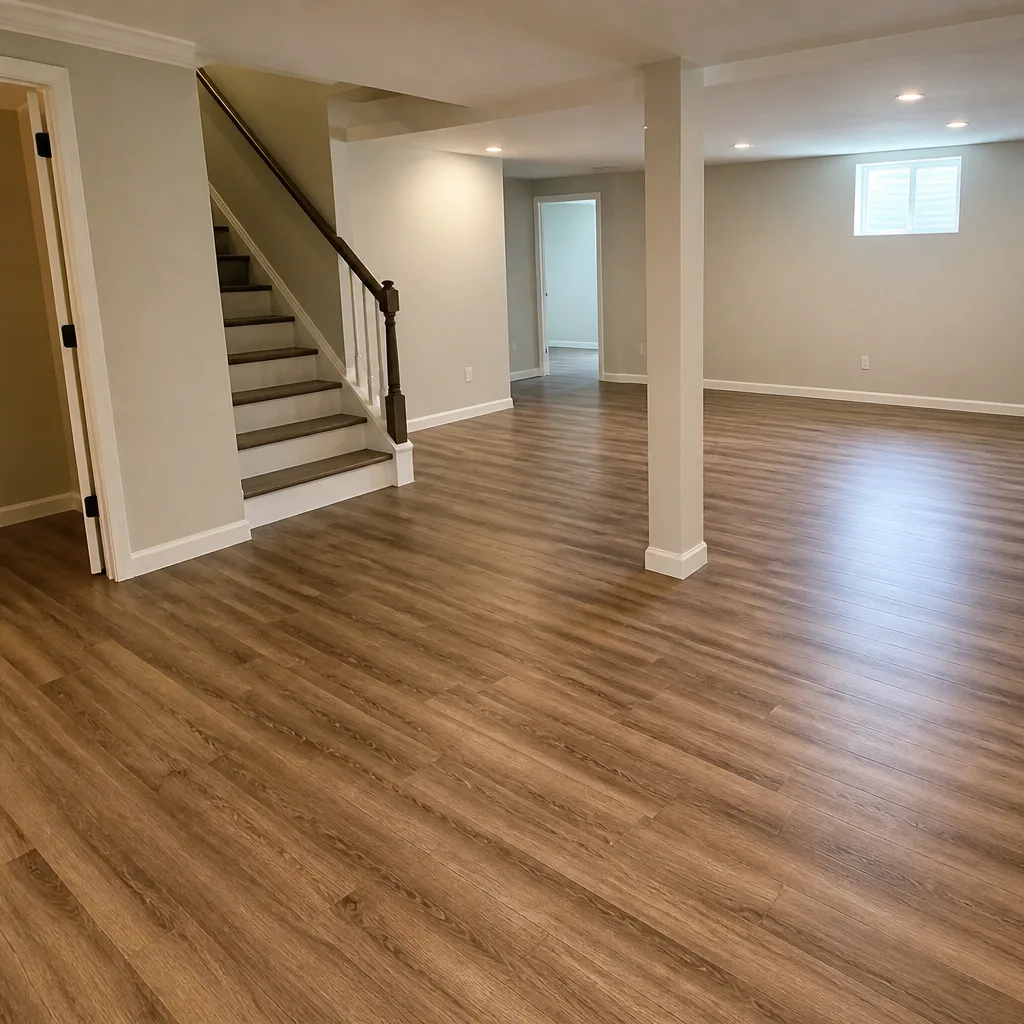
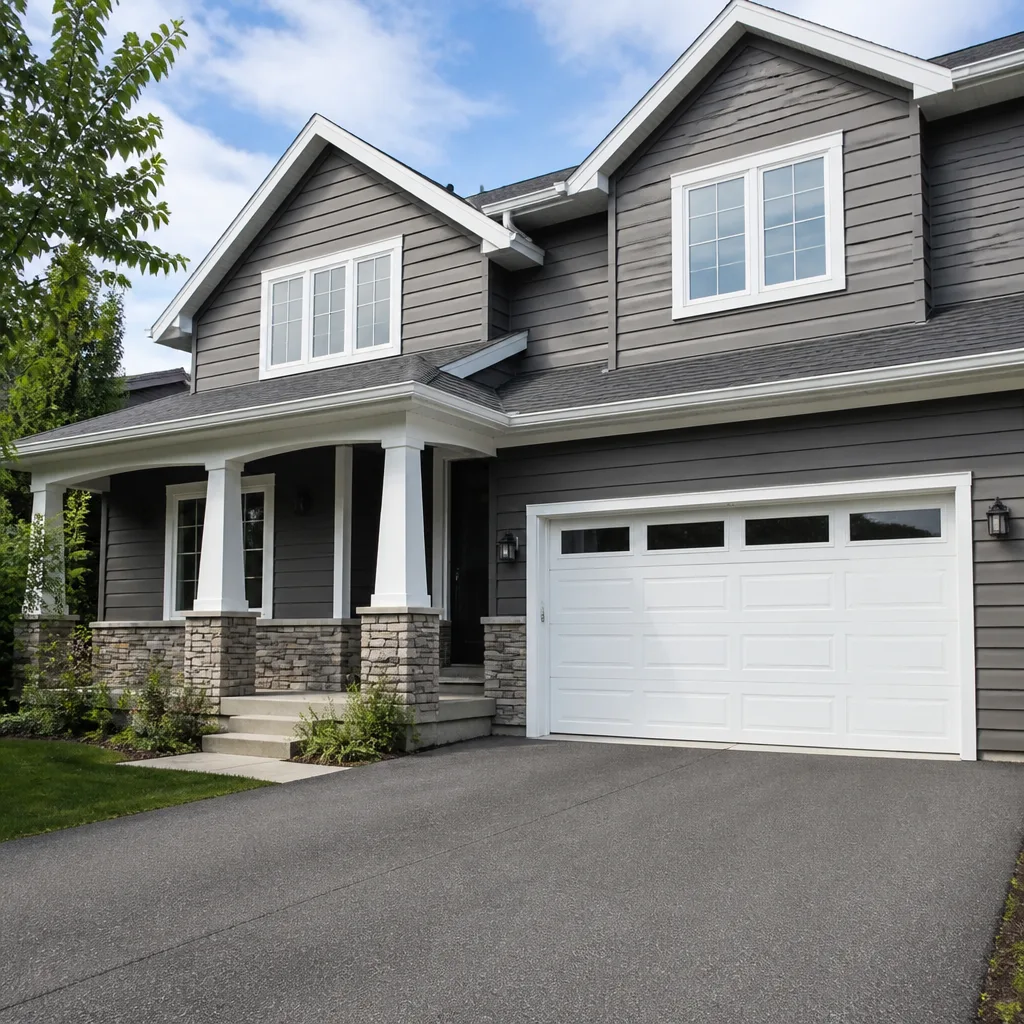
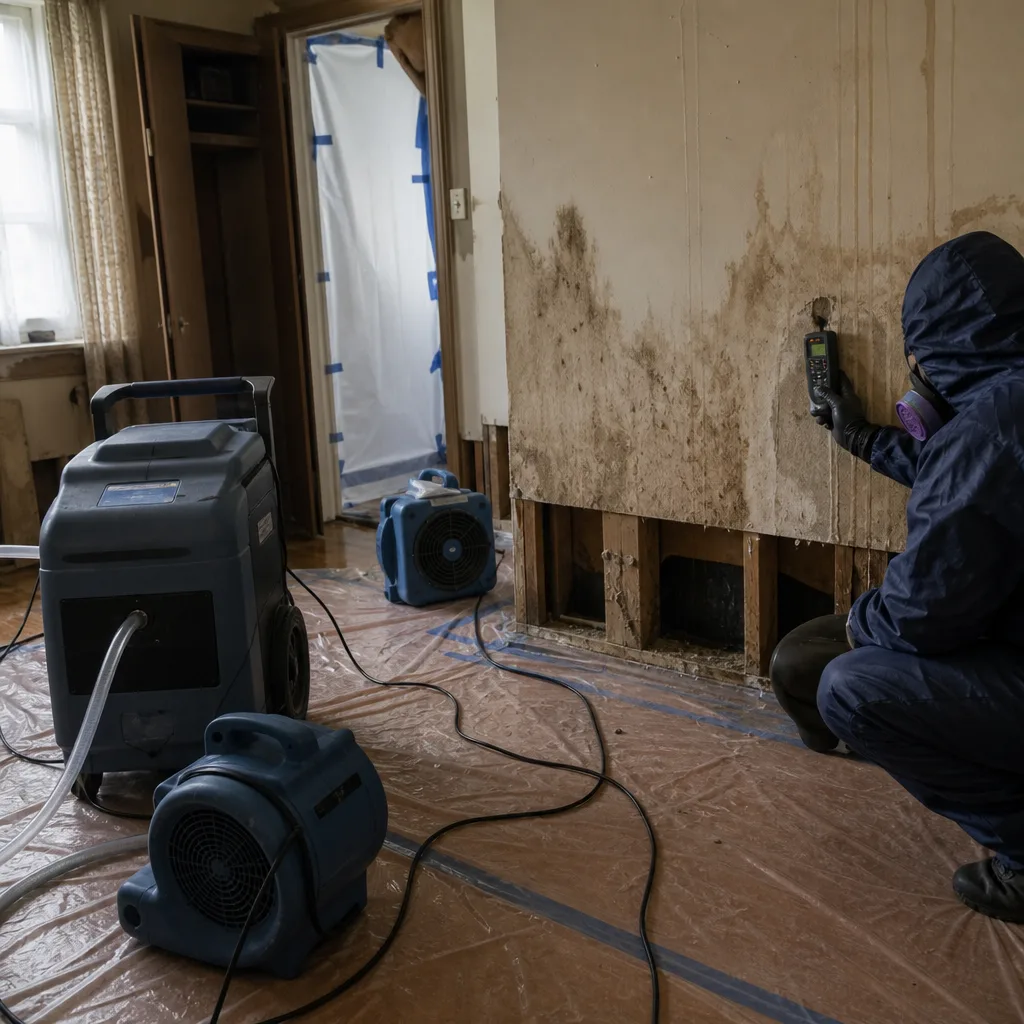 Before
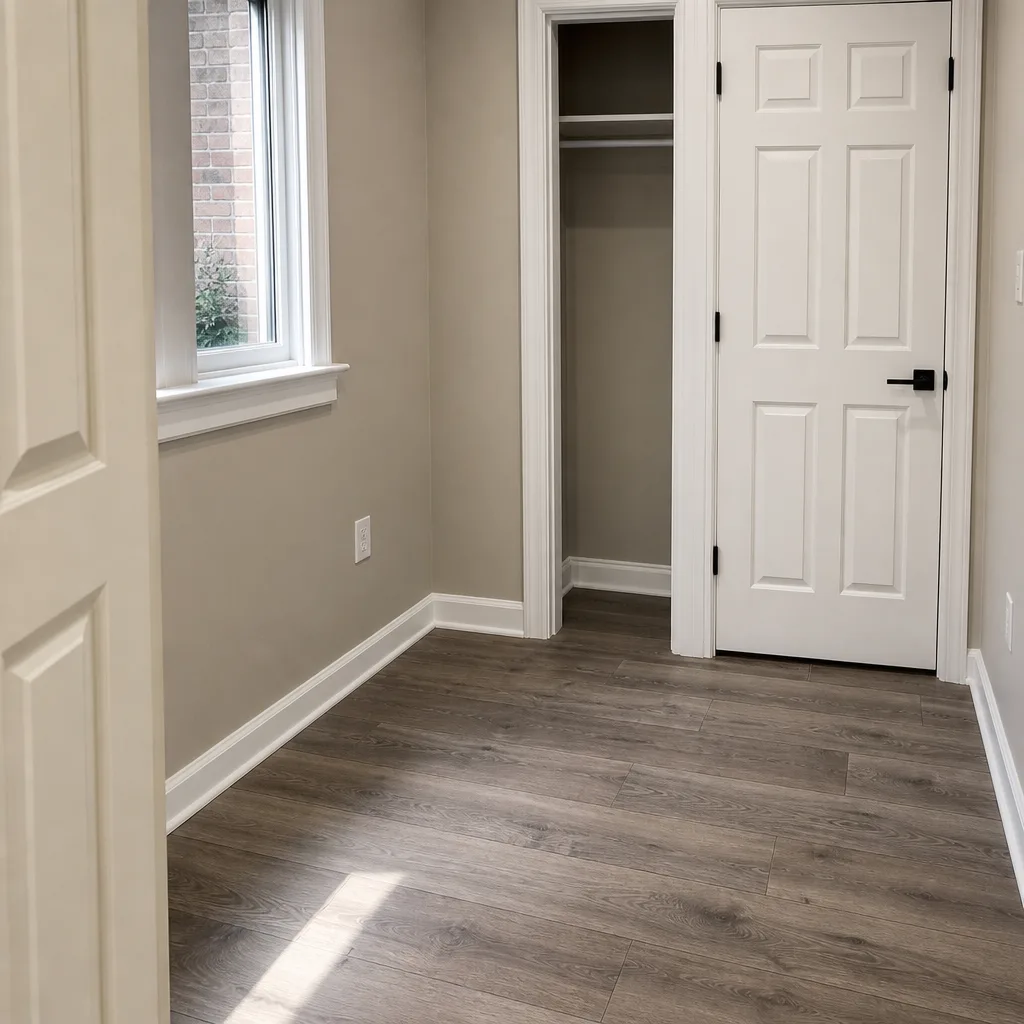 After
After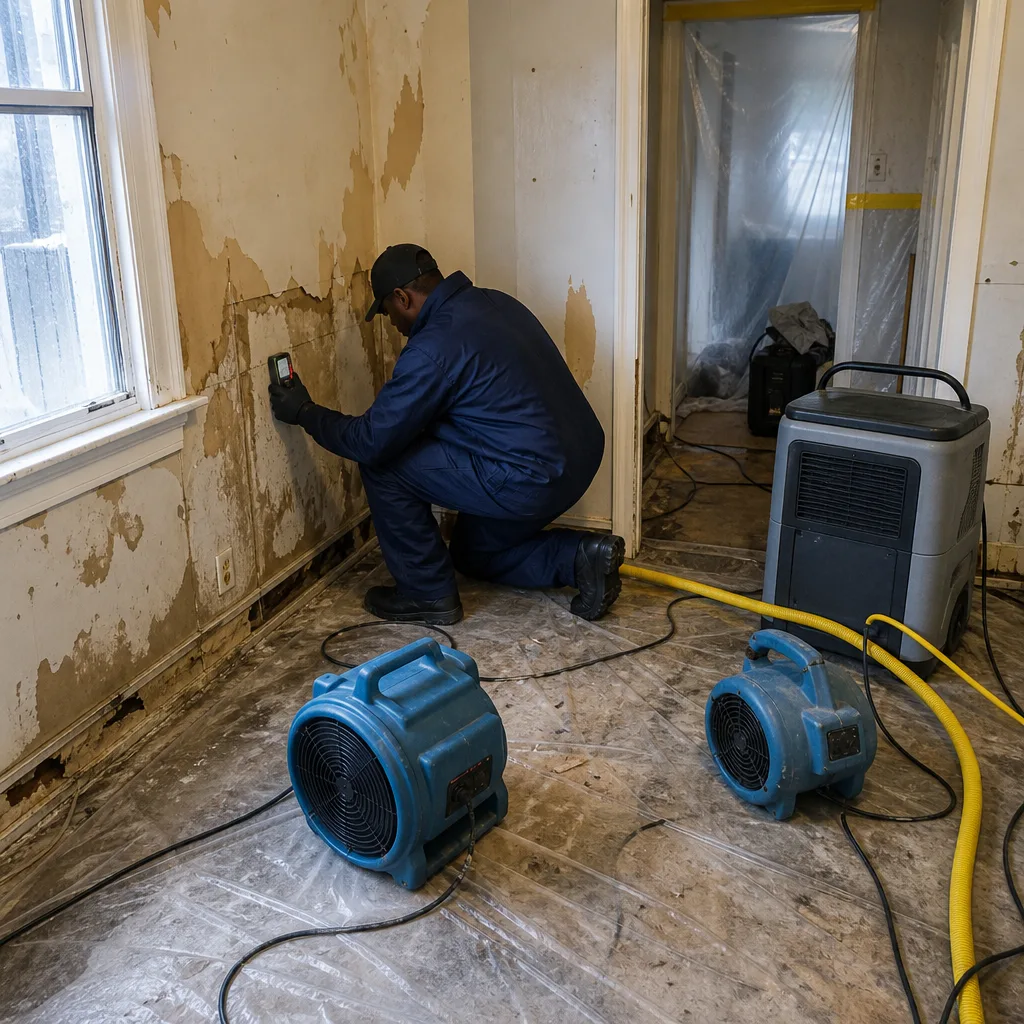 Before
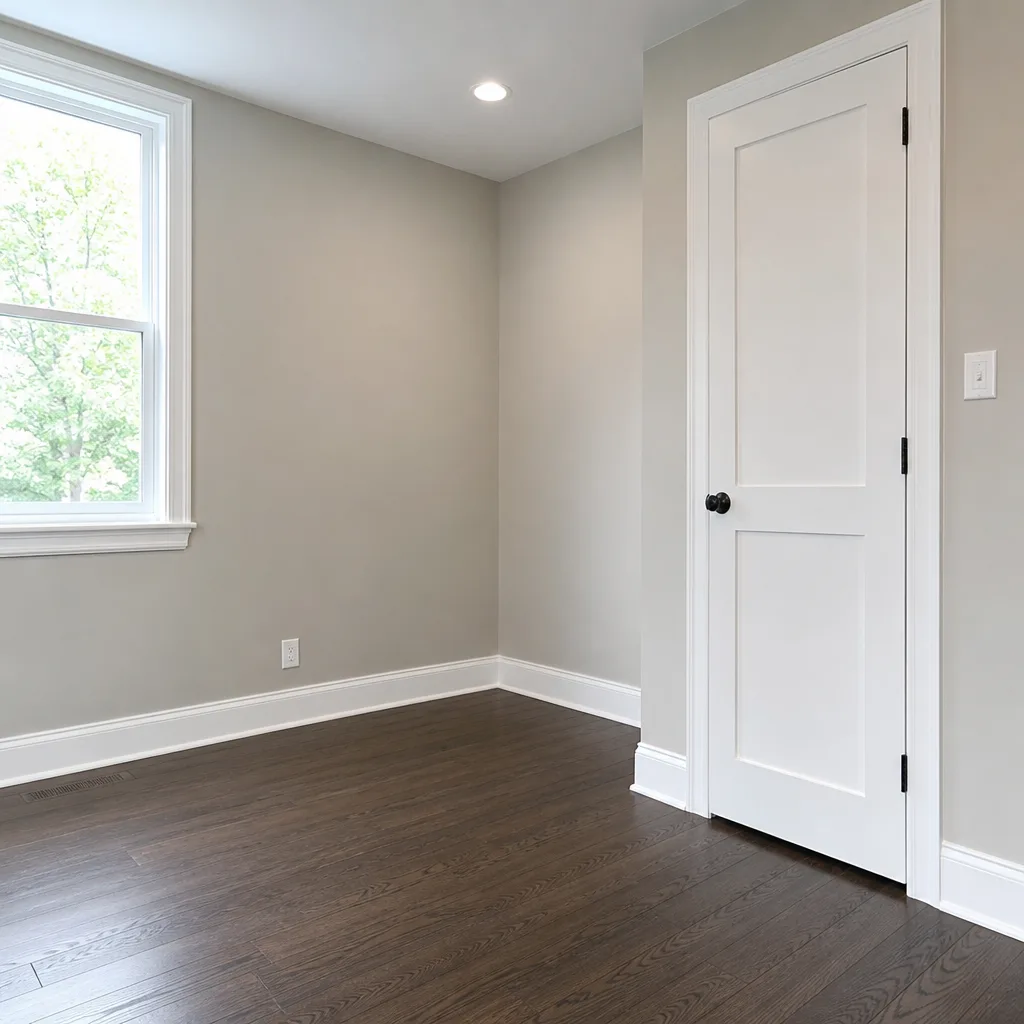 After
After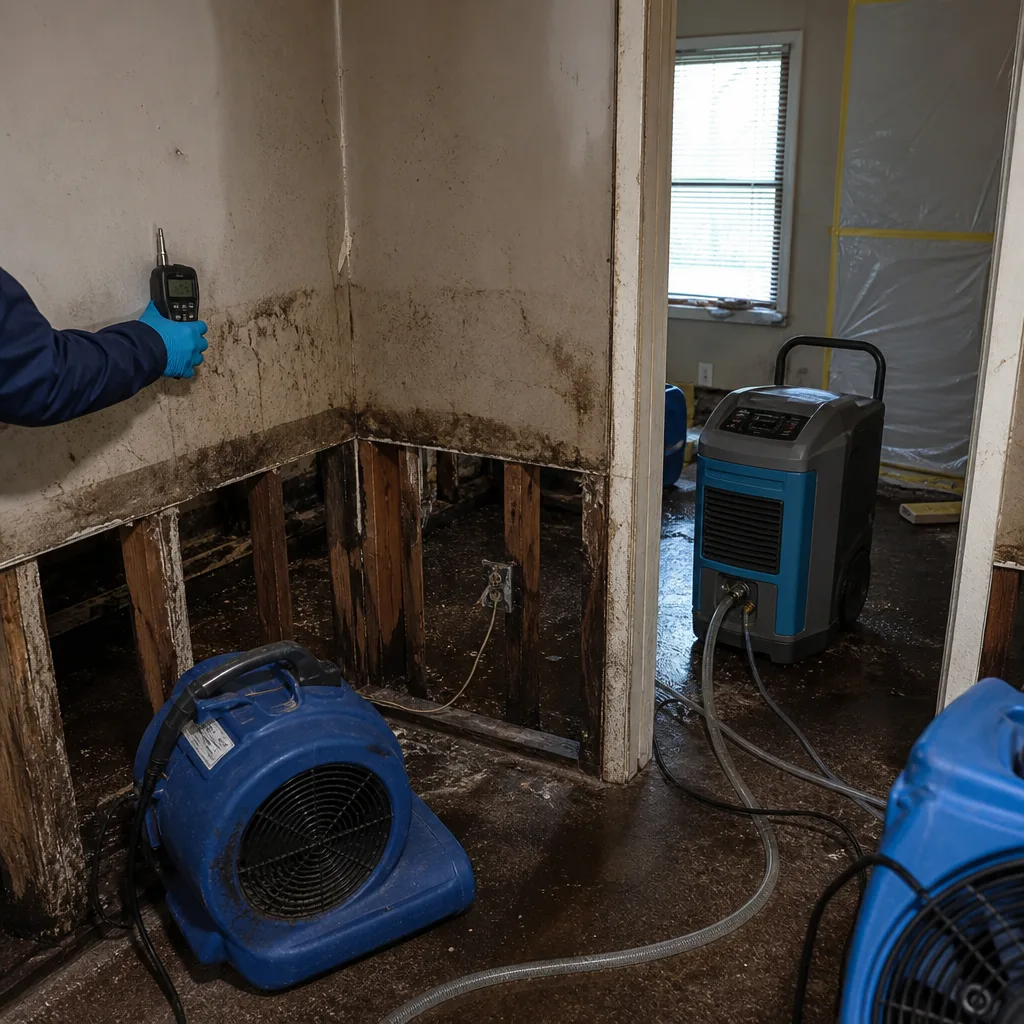 Before
 After
After24/7 Emergency Commercial Restoration in East New York
Commercial restoration in East New York starts with speed: a burst pipe over a retail stockroom at 2 a.m., a frozen parapet wall sending meltwater into top-floor offices near Atlantic Avenue, or storm surge backing up through a floor drain along Sutter Avenue. Our crews reach East New York properties around the clock because a live dispatcher answers (518) 750-3137 at any hour, not a recording. The first hour determines whether you’re drying sheetrock or tearing out inventory. We start extraction the same visit, using Dri-Eaz and Phoenix equipment to pull standing water before it migrates through slab floors and shared wall cavities in attached brick buildings. That speed is the difference between a contained loss and a Category 3 contamination event.
Understanding Commercial Restoration Severity in East New York Properties
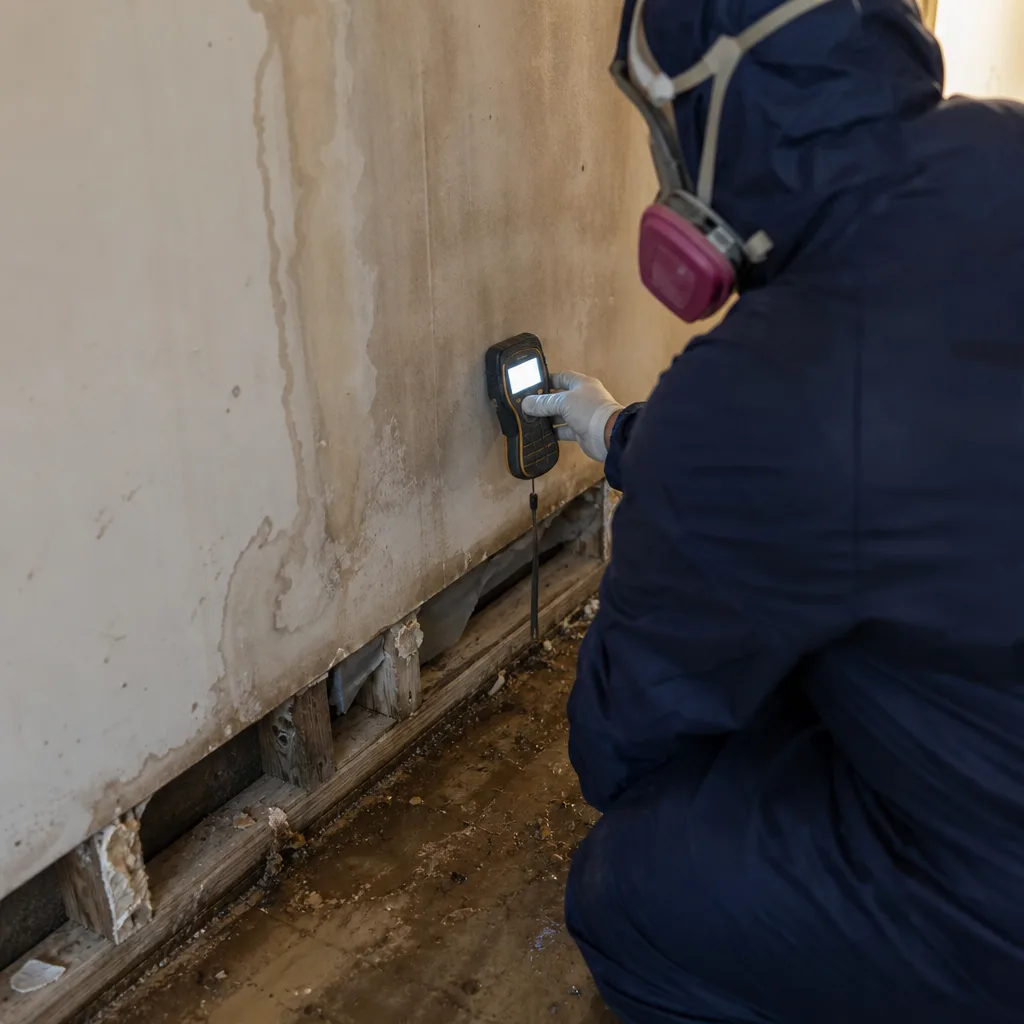
East New York commercial spaces present a specific severity problem: early-20th-century attached brick row buildings with shared party walls let water travel laterally between units, while NYCHA-era slab buildings with vertical plumbing chases send it floor to floor. A Category 1 clean-water loss from a supply line becomes Category 2 within 48 hours as it picks up drywall dust, adhesives, and grime. Once floodwater or sewage enters, it’s Category 3 and demands full containment, air scrubbing, and material removal. In the Spring Creek corridor near Jamaica Bay, saltwater intrusion adds a corrosive layer that accelerates rust on electrical boxes, lintels, and framing. Moisture mapping with thermal imaging lets us see what the naked eye misses: hidden reservoirs behind vinyl wallpaper, under LVT, inside wall cavities sealed during hasty post-Sandy repairs. We read the moisture map daily until pre-loss numbers are met, not before.
Why East New York Property Owners Choose Floodline Restoration Co.
- 45-minute response commitment: We dispatch crews from our New York City office to East New York immediately. A live person answers at 2 a.m., and a certified team is on the road within the hour.
- 24/7 live answer, always: No automated system. Curt Bowman built Floodline around a dispatch board, and that board is staffed every hour of every day.
- IICRC-certified crews: Our technicians hold WRT, FSRT, and AMRT certifications. Background-checked, uniformed, and trained to the standard your insurer expects.
- Free visual inspection: We assess the loss before you commit to anything. You get a written scope, not a pressure pitch.
- Direct insurance billing: We bill your carrier directly and coordinate with your adjuster, so you’re never the messenger between us and the claims desk.
- One team from extraction to rebuild: The same crew that reads the moisture map on day one handles daily readings, hands you the log, and rebuilds what needs rebuilding. No mid-job handoff, no inherited subcontractor.
Our Commercial Restoration Process
Inspection & Assessment
We arrive with thermal imaging cameras and hygrometers to map moisture across the affected East New York property. In buildings with unresolved HPD violations or prior post-Sandy repairs, we document pre-existing conditions before we touch anything, because your insurance claim and your landlord dispute both depend on a clean baseline.
Extraction & Stabilization
Standing water comes out first, always. In ground-floor commercial spaces near Flatlands Avenue, we run truck-mounted extraction units and subfloor suction mats to pull water from slab and sub-slab cavities before it wicks into inventory, drywall, and electrical.
Drying & Dehumidification
We set up containment and run Dri-Eaz and Phoenix dehumidifiers with XPOWER air movers, calibrated to the cubic footage of each affected space. Daily moisture readings are logged until every material hits pre-loss dryness. You get a copy of that log; so does your carrier.
Cleaning & Sanitization
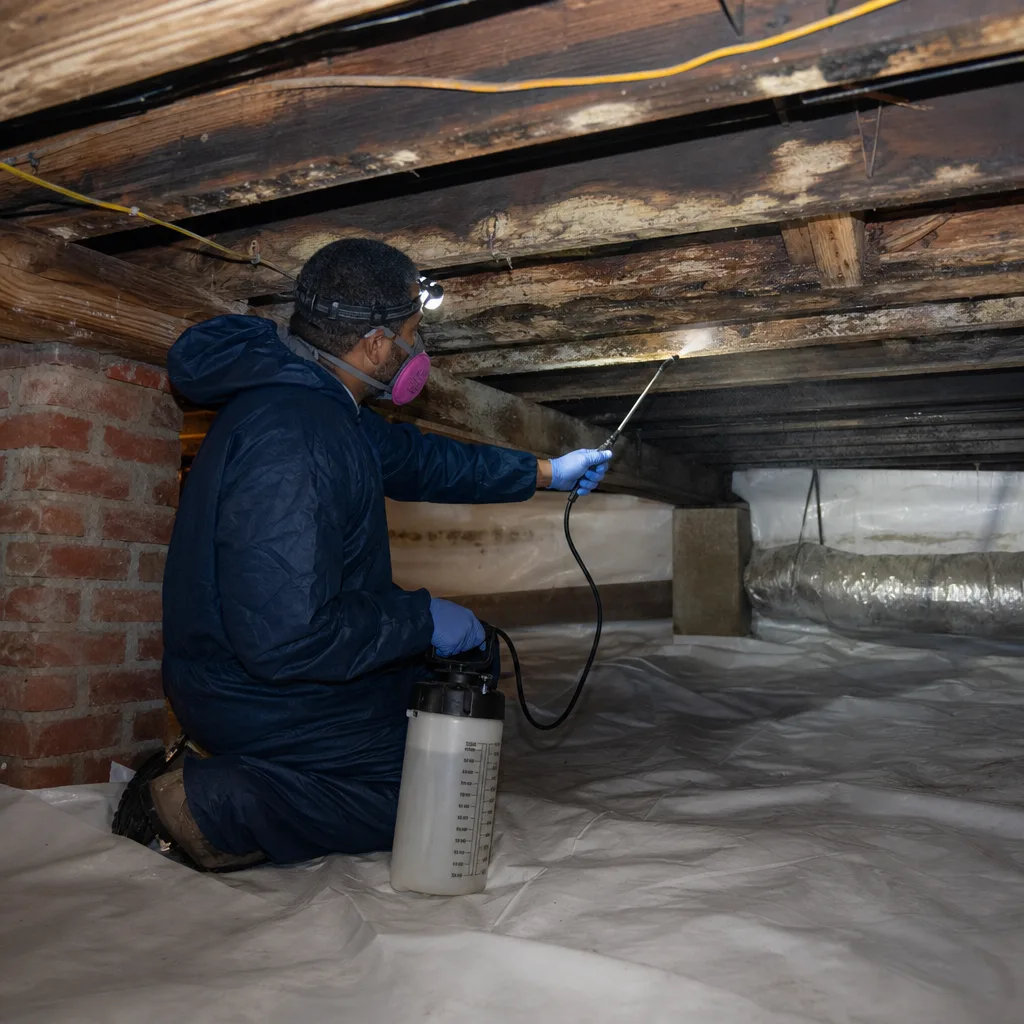
We clean, sanitize, and deodorize all salvageable surfaces. For sewage or saltwater losses near Jamaica Bay, this includes antimicrobial treatment on framing and substrate. HEPA air scrubbers run throughout to capture particulates that settle after the water is gone.
Specialty Treatment for Commercial Spaces
Depending on the loss, we apply targeted treatments: rust stabilization on steel lintels, document and inventory recovery for retail stock, pack-out of files and furniture to prevent secondary damage. Business interruption minimization is not an add-on; it’s built into how we sequence the work.
Repairs & Restoration
We rebuild what the water took: sheetrock, flooring, storefront lintels, parapet flashing, ceilings. Since we self-perform reconstruction, one company carries the job from first extraction to final coat of paint, and the 90-Day Done Right Promise covers it in writing.
Need Emergency Commercial Restoration in East New York Now?
Crews minutes away, answering live 24 hours a day. The sooner we start, the less it costs.
Working With Your Insurance Company
Every commercial loss in East New York sits at the intersection of insurance, landlord approvals, and public-agency requirements. We approach claims the way a claims adjuster would: evidence first. From the first hour, we photograph every damaged surface, log moisture readings by the hour in active drying zones, and write a line-item scope that your carrier can process without back-and-forth. For losses in the HPD-NYCHA-Sandy overlap zone, we document what predates this loss and what happened this week. That documentation matters when your landlord wants to take the security deposit or when the adjuster says a mold colony was pre-existing. We bill the carrier directly. You stay out of the payment fight.
What We Provide Your Insurer
- Thorough documentation of the loss
- Photos of all damage, room by room
- Moisture readings and drying logs
- A detailed, line-item scope of work
- Direct coordination with your carrier
Built for East New York’s Loss Calendar
East New York’s commercial restoration claims follow a pattern set by Brooklyn’s concrete geography and the age of its buildings. January and February bring deep freezes that crack uninsulated supply lines in unheated basements and burst riser pipes inside 1950s-era slab buildings along Linden Boulevard and Pennsylvania Avenue. March and April’s freeze-thaw cycles push water under flat roofs, through parapet walls, and into top-floor offices that store paper, electronics, and inventory. Summer thunderstorms overwhelm aging storm drains in the low blocks near the Belt Parkway, sending surface water through loading dock doors and into storage rooms. Nor’easters bring wind-driven rain that seeps through pointing failures in attached brick row buildings, and the Spring Creek corridor’s proximity to Jamaica Bay means any severe coastal storm puts ground-floor commercial tenants on notice. We schedule our seasonal readiness around this calendar, and our commercial clients do the same.
Commercial Restoration Across East New York’s Neighborhoods
The loss picture changes block by block in East New York. Around the Linden Houses and Pink Houses superblocks, we work inside NYCHA’s work-order system: approvals precede mitigation, so we document aggressively the moment we arrive, because every hour of visible water damage is a line in your claim file. Along Atlantic Avenue’s retail corridor, where storefronts sit shoulder to shoulder under shared parapets, a single failed roof drains into multiple leased spaces; we coordinate with adjacent tenants because their loss is often your humidity problem. In the Spring Creek and Gateway sections east of Erskine Street and south of Flatlands Avenue, the four-foot-plus surge levels from Sandy left a legacy: subfloors that were encapsulated, not replaced, now grow mold the moment any new moisture reaches them. And near New Lots Avenue and the 3 line stations, transit-adjacent storefronts in mixed-use buildings face the same party-wall water migration as their residential neighbors above. We run routes through all of it: down Pennsylvania Avenue, across Pitkin, out to the low blocks by the bay.
Specialized Commercial Restoration Services We Offer in East New York
Multi-Unit & HOA Restoration
Multi-unit commercial buildings in East New York mean shared plumbing chases, shared roofs, and shared walls. A burst riser on the fourth floor of a co-op or commercial condo becomes a first-floor retail problem by morning. We scope the entire migration path, not just the visible stain, and we document each unit’s pre-loss condition so the HOA board and each leaseholder have a clean claims file. For building managers overseeing NYCHA-adjacent properties, we coordinate directly with work-order approvals and provide the documentation HPD inspectors expect.
Large-Loss Response
When a fire, flood, or structural failure hits an entire East New York commercial building, scale is the first problem. We bring multiple extraction crews, trailer-mounted dehumidifiers, and generators so drying starts on every floor simultaneously. Large-loss response along Flatlands Avenue or New Lots Avenue means managing the insurance carrier, the landlord, and every tenant at once. We have done it. We assign a single project lead who speaks to all parties daily.
Business Interruption Minimization
The longer a commercial space stays wet, the longer the revenue stops. In East New York retail and office spaces, where every day closed is a day of rent paid and nothing earned, we sequence work to get primary revenue areas functional first: drying the sales floor while containing the back stockroom, isolating the electrical panel with a temporary disconnect while drying proceeds, running drop lines and drying mats under display units rather than pulling everything out. This is not standard practice at franchises that strip a space to the studs and ask questions later. It’s how a local outfit that has worked this neighborhood for years moves.
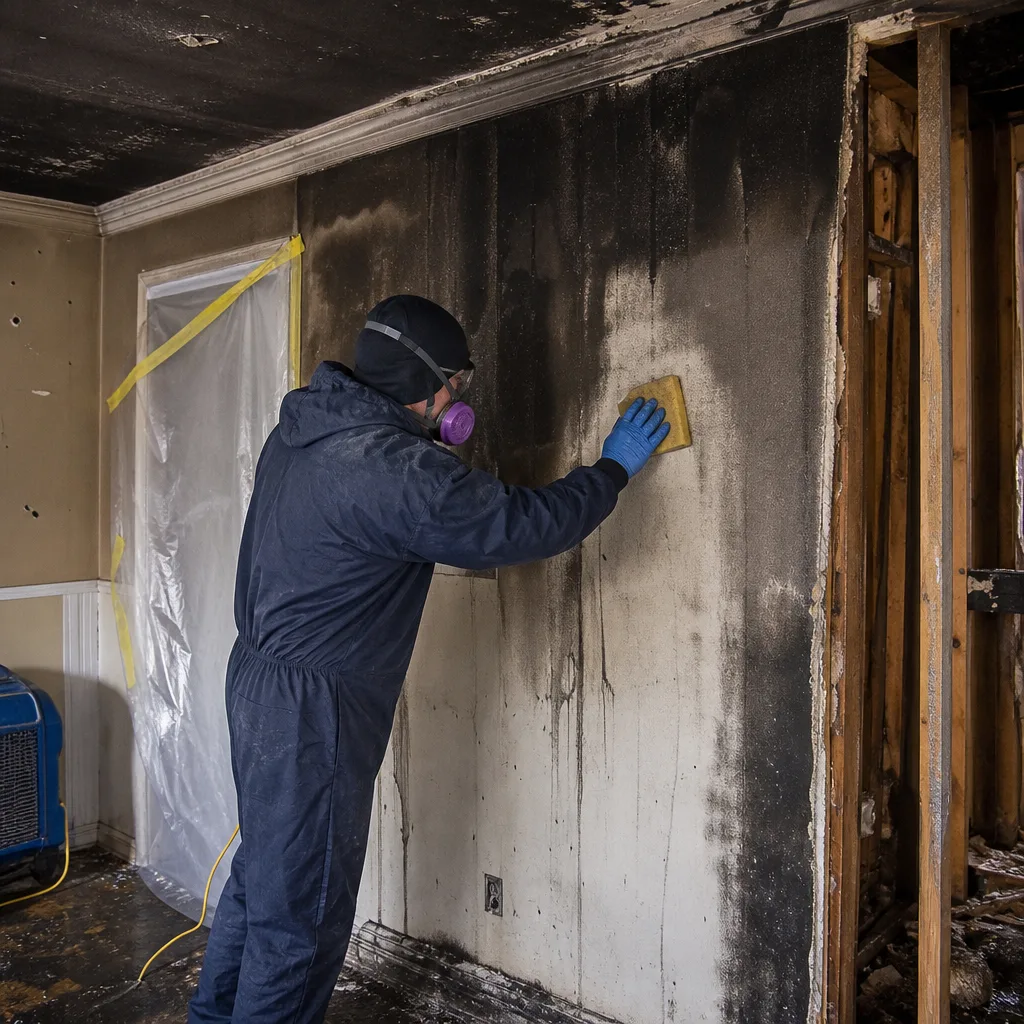
Office & Retail Restoration
Office and retail spaces near Atlantic Avenue and Pitkin Avenue hold document archives, point-of-sale systems, and seasonal inventory that cannot be casually replaced. We do content restoration and pack-out before demolition where it matters, and we dry in place when materials allow. Salt air and Sandy’s residue make rust a live issue in these buildings: steel lintels above storefronts, electrical boxes in basements, fasteners on HVAC plenums. We inspect for corrosion as part of every water loss scoping.
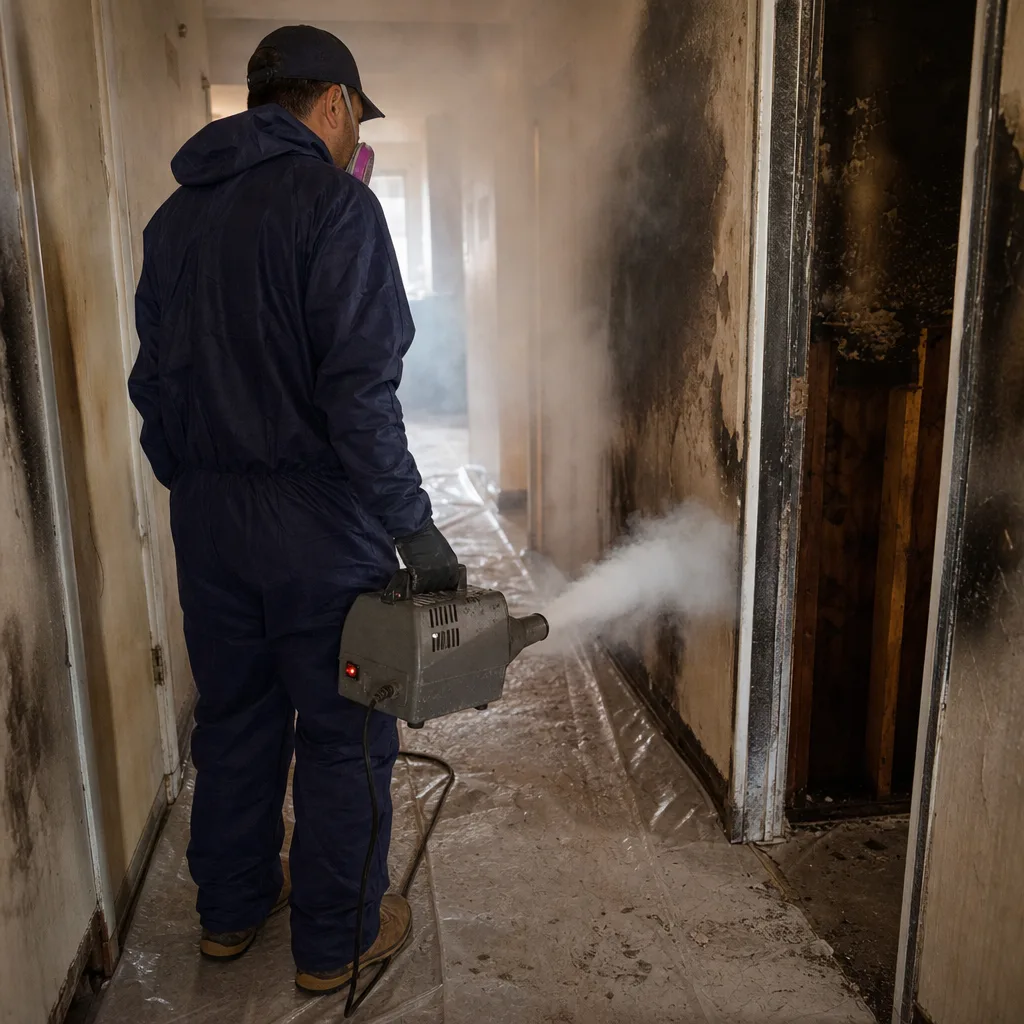
Industrial Facility Cleanup
Industrial spaces in East New York’s eastern blocks, near the rail yards and the old manufacturing corridors, need different math. High bay spaces, loading docks, and heavy equipment change how water migrates and what drying looks like. We scale air movement to cubic footage, use desiccant dehumidifiers for deep moisture in concrete, and treat rusted steel components with corrosion inhibitors before they compromise structural fasteners. The same salt air that eats storefront lintels out here eats everything.
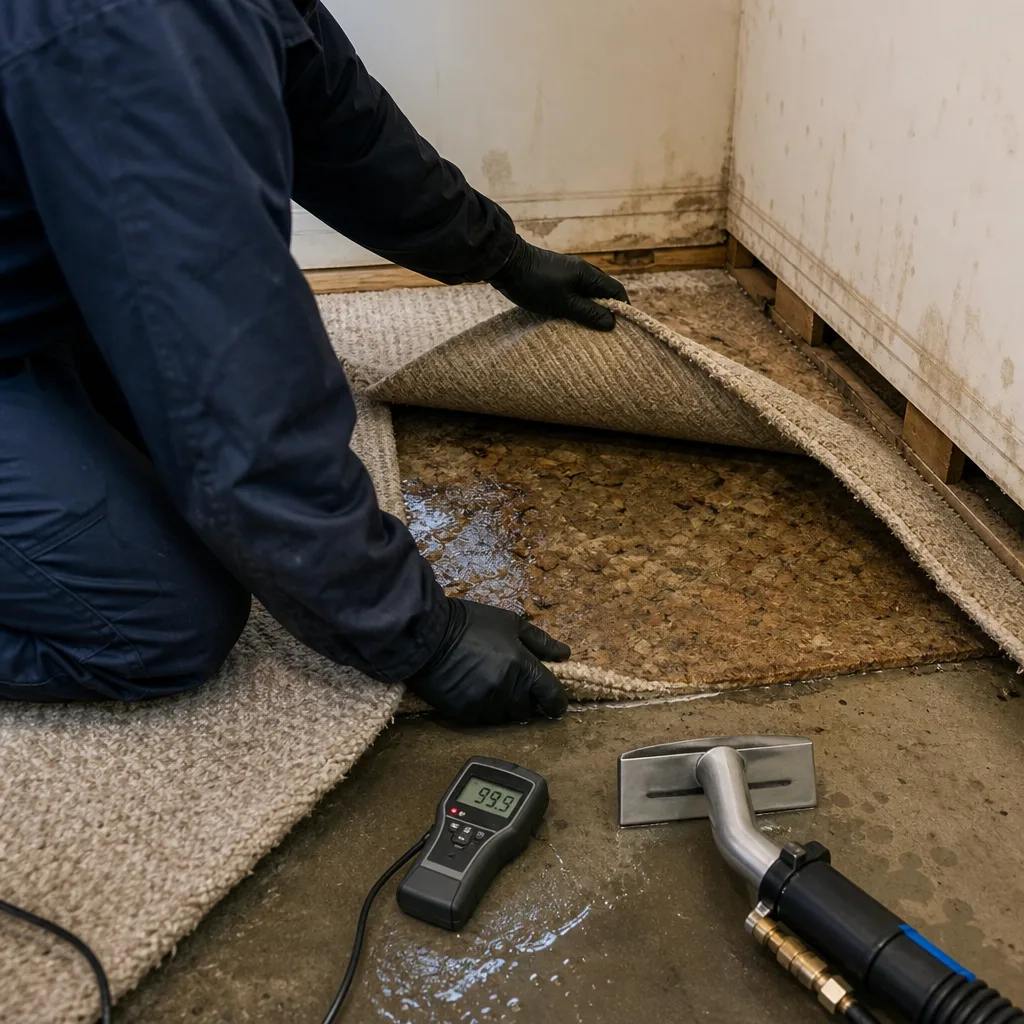
What happens when you call
- 1
A real person answersNo phone trees - you reach a local pro.
- 2
You get an upfront price rangeHonest numbers before anyone is dispatched.
- 3
A background-checked tech heads outLicensed & insured, dispatched right away.
- 4
You approve before work beginsNothing starts until you say go.
Commercial Restoration Costs in East New York, NY
Commercial water restoration in East New York typically runs $3.50 to $7.00 per square foot for extraction, drying, and sanitization in a Category 1 or 2 loss. That range shifts with the class of water: a clean supply-line burst in a retail space may land near the low end, while Category 3 sewage or Jamaica Bay tidal intrusion pushes costs to $7 to $12 per square foot, because the remediation protocol changes completely. A typical small retail space of 800 square feet faces roughly $2,800 to $5,600 for full mitigation. Larger multi-unit losses spanning multiple floors and shared wall cavities routinely pass $25,000 before reconstruction begins. Mold remediation behind walls discovered mid-project adds $1,500 to $4,000 per affected room, depending on containment complexity and clearance testing. The free inspection produces a firm written scope, so you know the number before we cut anything open. Most East New York commercial losses are insurance-covered; we bill your carrier directly. The $50 Off Any Repair Over $250 offer and the Senior & Veteran 5% Discount apply to out-of-pocket repair work, always.
We Also Serve Cities Near East New York
Our crews serve commercial properties across Brooklyn’s eastern edge and beyond. We regularly work in East Flatbush, Sunset Park, Bedford-Stuyvesant, and Bensonhurst. If your business sits in one of those neighborhoods and the loss is active, call (518) 750-3137 and we will route a crew from the nearest response point. The same live dispatcher answers, every hour.
Serving East New York, NY - Our Local Coverage Area
We’re based in the East New York area and know this community well. Use the map below to see our service coverage - if you’re nearby, we can almost certainly help.
East New York Commercial Restoration Questions, Answered
How do you handle a commercial water loss in an East New York building with unresolved HPD violations?
We document the pre-existing condition of the unit before starting any mitigation, because the violation history establishes what was already failing versus what this loss caused. Photos, moisture readings, and a written scope create the baseline. We proceed with emergency extraction while communicating directly with your landlord and HPD so the work does not complicate the violation file. Call (518) 750-3137 and we will walk the site with you.
What happens if we discover black mold inside a wall during a commercial restoration near Jamaica Bay?
We stop the affected area’s drying, establish containment, and run HEPA air scrubbers before disturbing the material further. Mold discovered behind vinyl wallpaper or under LVT in Spring Creek buildings is often residual Sandy damage that was encapsulated rather than removed. We document it, report it to you and the carrier, and remediate to clearance standards before drying resumes. Untreated, it will reactivate with every seasonal moisture event.
Can you restore our East New York commercial space without shutting down our business for weeks?
Most East New York retail and office losses can be sequenced so primary revenue areas reopen quickly while drying continues behind containment. We run desiccant dehumidifiers and air movers in contained zones while the sales floor stays dry and usable. In some cases we work after hours. A written scope before work starts tells you exactly what stays open and what closes.
We manage a ground-floor commercial space within a quarter mile of Jamaica Bay. How do you handle tidal floodwater with possible sewage backup?
We treat any Jamaica Bay tidal water as Category 3 contaminated water, because storm surge carries sewage, road runoff, and salt. That means full containment, antimicrobial treatment, and removal of porous materials that absorbed it. We also inspect steel lintels, electrical boxes, and fasteners for salt corrosion, which accelerates in the bay blocks. This is the exact loss pattern we have cleaned up since Sandy.
How do you document restoration for a NYCHA-leased commercial unit to get our security deposit back after a leak from the apartment above?
We photograph every surface before and during work, log daily moisture readings, and write a final report that separates the source of the water from the damage it caused. When the leak came from the unit above, that report is your leverage. We have done this in NYCHA-leased spaces throughout East New York, including the commercial strips adjacent to the Linden Houses and Pink Houses, and we know exactly what the property managers ask for.
How fast can you actually reach an East New York commercial property?
Our crews coordinate from our New York City dispatch office and typically reach East New York properties within 45 minutes of your call. A live person answers at (518) 750-3137 at any hour, and extraction equipment rolls the same visit. In a commercial loss, that first hour is when slab wicking and document damage are still preventable.
What certifications do your technicians hold?
Our technicians are background-checked and certified to IICRC standards, including WRT for water damage, FSRT for fire and smoke, and AMRT for applied microbial remediation. They train to RIA and IFA protocols as well. They arrive in uniform and carry identification. The crew that starts the job stays on the job through the rebuild.
What should I do in the first 30 minutes after discovering a commercial water loss in East New York?
Call us at (518) 750-3137 before moving anything. If it is safe, shut off the water at the source or the main, and cut power to the affected zone at the panel. Do not enter standing water if it may be energized or contaminated. Move paper documents and electronics off the floor only if you can do so without walking through contaminated water. Then let our crew take moisture readings and start the log. A small delay now is a big claim difference later.
Written by Curt Bowman, Owner at Floodline Restoration Co., serving commercial properties across New York City and East New York.